Key Takeaways
- Goals first, design second. Every booth setup decision, from footprint to lighting to interactive elements, should trace back to a specific objective like lead generation, product launch, or deal-making.
- Visual hierarchy wins the floor. Attendees make split-second decisions about whether to approach booths. Brand colors, key messages above crowd height, and bold graphics are non-negotiable for a crowded trade show.
- Lighting, layout, and interactivity shape the experience. Flat convention lighting, bottleneck traffic flow, and static displays kill engagement. Dedicated lighting design, zoned layouts, and interactive experiences turn a booth stand into a destination.
- Budget smarts beat budget size. Modular exhibits can be reconfigured for different booth sizes and reduce costs by reusing components across events. Prioritize structure and hero graphics; rent or simplify the rest.
- FGPG delivers end-to-end. From strategy workshops through fabrication in their 81,000 sq ft facility to on-site installation, FGPG has designed and produced trade show exhibits for brands like Panasonic at AHR/IBS, Lakeshore Learning at NAEYC, and Marvel SNAP at New York Comic Con.
Designing For Real Trade Show Floors, Not Mood Boards
Figuring out what to consider when designing trade show exhibits goes well beyond picking colors and furniture. The process spans strategy, booth design, fabrication, on-site execution, and post-show measurement. Skip any one of those layers and the exhibit underperforms.
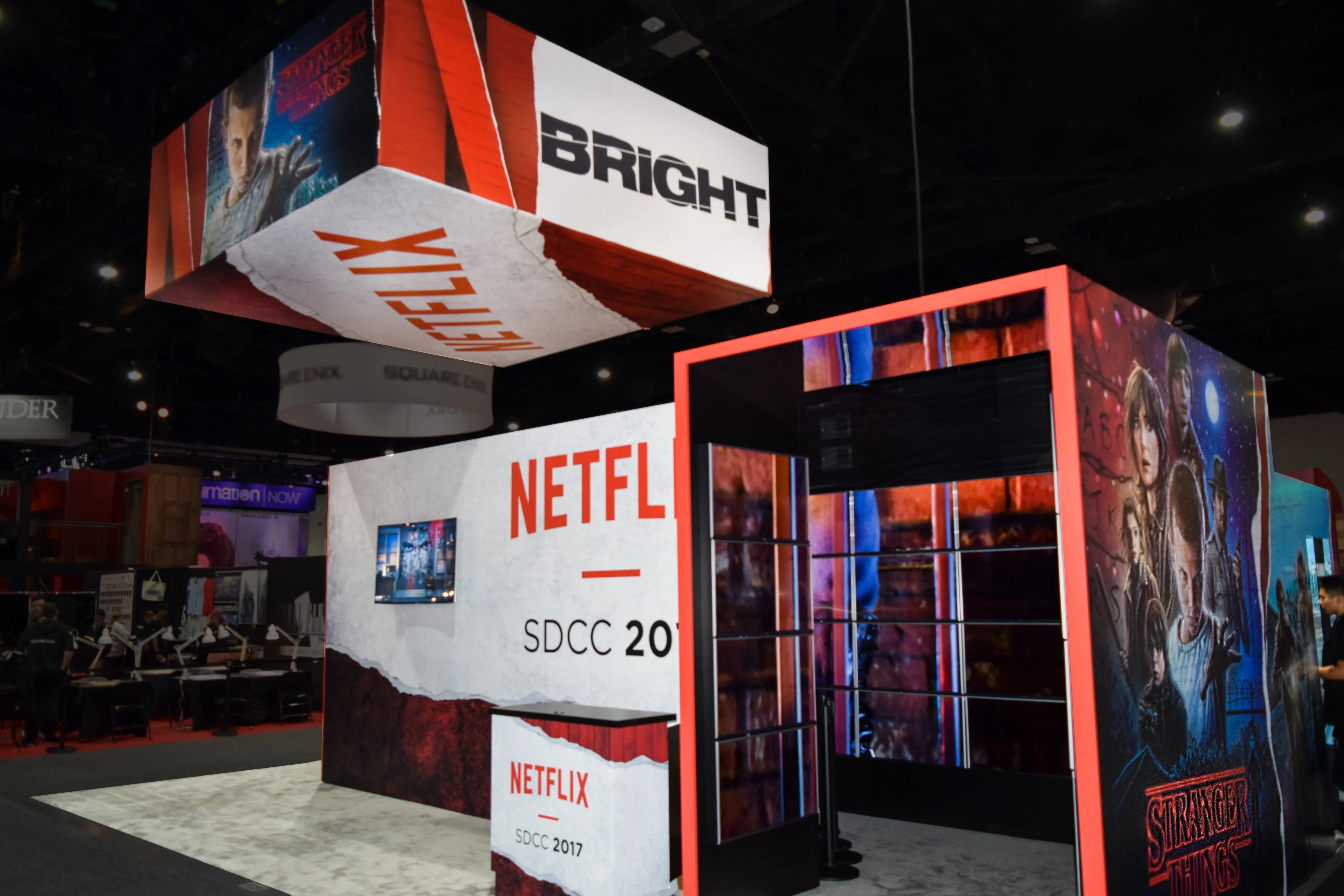
Picture the reality of a crowded trade show floor at CES, NAB, or Comic-Con: thousands of attendees walking past hundreds of booth stands, each competing for a three-second glance. WayRay's CES interactive booth used immersive projection and AR technology to stop foot traffic cold. Netflix at Comic-Con built a brand world so vivid that attendees lined up to enter. Cars Commerce at NADA created an island exhibit that turned automotive data into a walkable, tactile environment. Each of those projects was designed and produced by FGPG.
Throughout this article, FGPG's portfolio of 50+ projects serves as the case study library. FGPG designs, builds, and manages exhibits across tech, automotive, gaming, retail, entertainment, and education. The examples here are drawn from real show floors, not mood boards.
Clarify Exhibit Objectives Before You Sketch A Line
Clear goals should be established before designing a trade show exhibit. A product launch at CES 2027 requires a hero display zone and press briefing area. A lead generation program at NADA 2026 needs badge-scanning stations, counter space for conversations, and a workflow for qualifying contacts. These are different booths.
Common objectives and how they shape booth setup:
- Product launch: hero product environment, media capture zones, large screens that can display product demos and customer testimonials
- Lead capture: open entry points, lead-scan stations, enough space for staff to qualify visitors quickly
- Deal-making: private or semi-private meeting rooms, comfortable seating, scheduled appointment flow
- Brand awareness: tall signage, eye catching graphics, social-media-friendly backdrops
- Partner meetings: hospitality lounge, catering-ready fixtures, audio separation from the show floor
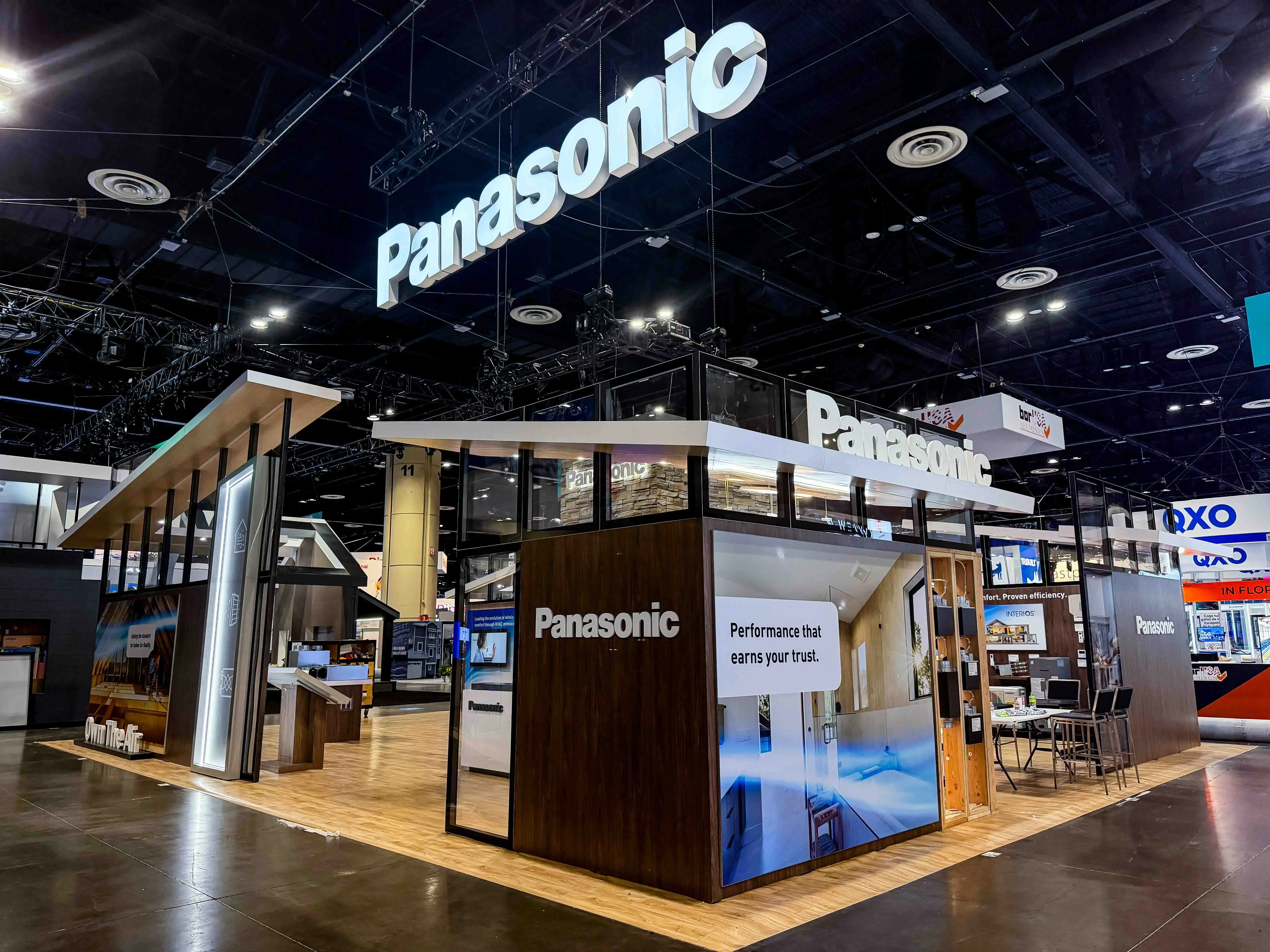
FGPG's Panasonic at AHR and IBS project illustrates this well. The booth included working HVAC and ERV product demos for engineers, an "Atmosphere Zone" showing products in context for architects, a seminar micro-stage, and a private conference room for closing deals. Two audiences, two shows, one exhibit system, all driven by distinct objectives defined in pre-show discovery workshops.
Know Your Audience, Venue, And Show Culture
Understanding the target audience is crucial for effective exhibit design. Gamescom attendees expect immersive gameplay and high energy. NAEYC visitors are early childhood educators who want hands-on learning tools. LA Auto Show crowds are a mix of consumers and industry professionals looking for spectacle.
Research attendee profiles, buying roles, and expectations before you commit to any booth design ideas. What content formats do they respond to? Do they expect hospitality? Are they there to buy or browse?
Venue-specific constraints matter just as much. Ceiling height dictates whether you can use overhead elements or hanging signs. Rigging rules, dock schedules, and union labor policies vary from the Las Vegas Convention Center to the Javits Center to the San Diego Convention Center.
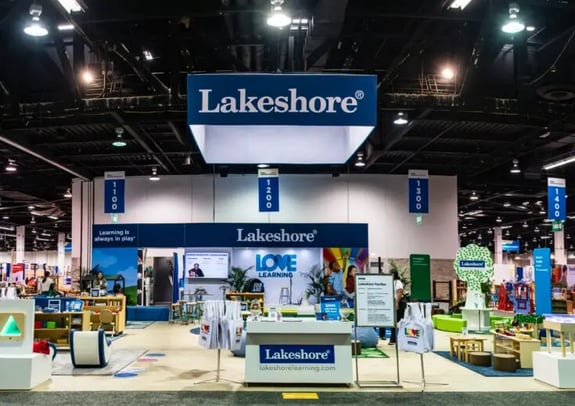
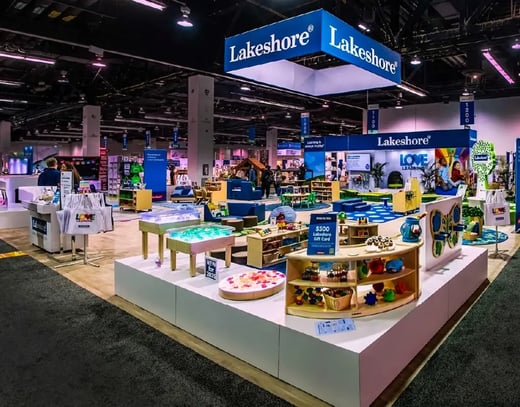
FGPG's Lakeshore Learning at NAEYC project required playful fixtures, accessible trade show displays, and safe traffic patterns for an educator-focused environment. The design team built a kid-friendly booth with modular shelving, product interaction zones, and wide aisles. FGPG's event strategy and production teams routinely pre-scout venues to anticipate restrictions before design begins.
Choose The Right Booth Structure And Footprint
Booth size and structure define how attendees see and enter your exhibit space.
- Inline booths are the most common and budget-friendly option, with one open side facing the aisle.
- Corner booths allow access from two sides, increasing foot traffic by exposing the brand to cross-aisle traffic.
- Peninsula booths are accessible from three sides for larger displays and more room to create demo areas.
- Island booths are freestanding and accessible from all four sides, giving full 360-degree visibility and storytelling flexibility.
Choosing the right booth structure depends on goals and budget. Cars Commerce at NADA used an island layout to create a walkable data environment. SPARQ at the LA Auto Show used an attention-grabbing island build with vertical elements. Smaller booths at vertical conferences can still perform with strong back wall graphics and focused messaging.
Maximizing vertical space boosts booth visibility. FGPG's Panasonic exhibit used towers at 16 to 18 feet depending on venue ceiling height, making the brand visible across the hall. FGPG engineers are required to reconfigure across 10x20, 20x20, and 30x30 layouts while preserving structural integrity and consistent branding.
Branding, Color, And Visual Hierarchy That Cut Through The Noise
You have 30 seconds to make a first impression. On a crowded trade show floor, that window shrinks further. Attendees scan dozens of booths per minute. Brand colors and messaging hierarchy are the difference between a glance and a visit.
Effective trade show exhibits require a strategic blend of psychology and branding:
- Limit the primary palette to 2 to 3 core brand colors plus one accent. Apply them to walls, counters, flooring, and staff apparel.
- Primary value propositions and logos must be legible from at least 10 to 15 feet away. Immediate value propositions should be communicated within a few seconds.
- Key messages (what you do, for whom) should sit above 4 feet in large, high-contrast type readable from 30 to 50 feet.
- A well-branded booth increases recognition and reduces confusion. Consistent visuals enhance memorability.
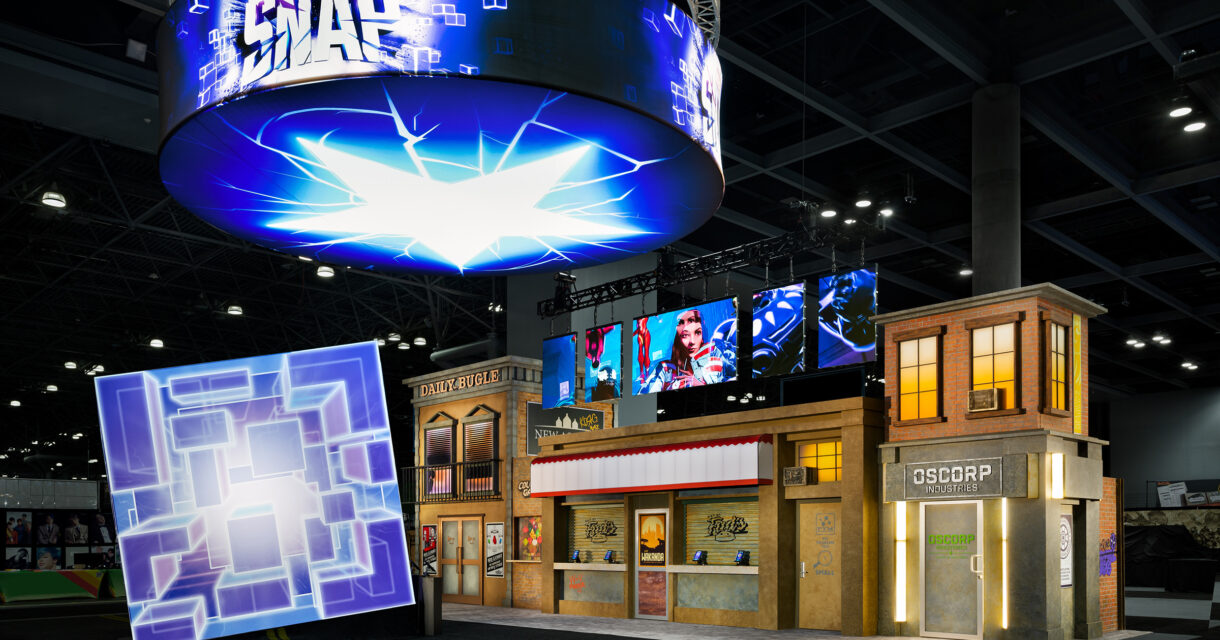
Netflix at Comic-Con created a bold, instantly recognizable brand world with strong IP-driven visuals. Marvel SNAP at New York Comic Con used a "Cosmic Collector's Cube" built from mirrored surfaces and digital screens that communicated the game's identity from every angle. Strong branding makes your company instantly recognizable; clear branding helps attendees understand your offerings quickly.
FGPG collaborates with brand and agency teams to translate digital guidelines into large-format print, scenic builds, and immersive custom graphics without color drift. Your company logo and company name should never look different from one show surface to the next.
.webp?width=2400&height=1556&name=Copy%20of%20ByteDance-Marvel%20Snap-FGPG-NY-ComicCon-2%20(1).webp)
Lighting: Sculpting The Booth Experience
Lighting is an underutilized tool for capturing attention in exhibits. Convention-center house lighting is flat and inconsistent, typically cool fluorescent. Without dedicated booth lighting, even bold graphics and premium materials look washed out. Booth lighting can enhance visitor experience when designed with intention.
Core strategies:
- Ambient lighting at 4000 to 4500 K (neutral white) for safe, brand-accurate color rendering across most industries
- Spotlights on hero products, stages, or signage to create strong visual impacts from a distance
- Accent lighting (LED lighting strips, backlit panels) to outline architecture and draw the eye
- CRI 90+ fixtures so brand colors and graphics render accurately
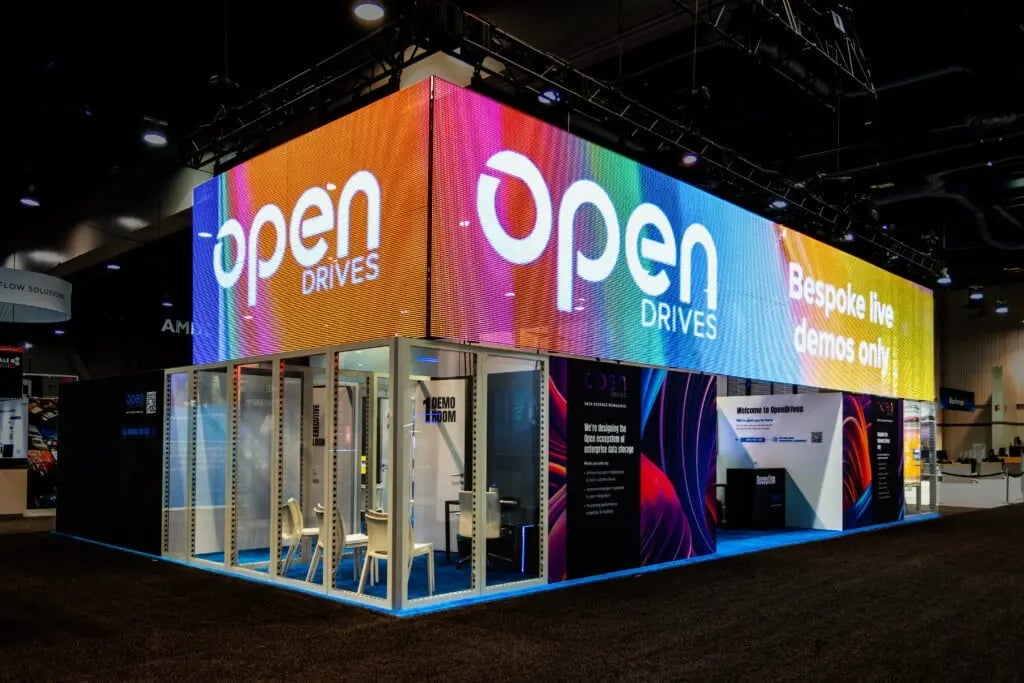
WayRay's CES interactive booth used targeted lighting to isolate AR projection zones from ambient glare. OpenDrives at NAB lit hardware displays with cooler white (5000 to 6500 K) to match the tech-forward brand tone. FGPG integrates lighting plans into structural design and runs pre-show lighting tests to avoid glare on screens and banner stands.
Layout, Traffic Flow, And Comfort In A Crowded Trade Show
A booth successful at a crowded trade event handles surges of foot traffic and small, high-value conversations at the same time. An open-concept layout encourages natural traffic flow at trade shows. Bottlenecks near the entrance or demo zones kill dwell time.
Design clear entry points and intuitive paths:
- Open corners and minimal barriers near aisles invite walk-ins
- Separate high-energy engagement zones from quieter content or meeting areas
- Zone the booth space into 3 to 4 functional areas: welcome/qualify, demo or hands-on, content viewing, and semi-private meetings
- Booth staff should be approachable and ready to engage with attendees, positioned at entry zones rather than behind counters
Acoustics are important for managing noise in trade show environments. Even a partial wall or overhead canopy between demo zones and meeting areas reduces cross-talk.
FGPG's Gamescom and VidCon exhibits separated gameplay stations (high energy, loud, crowd-facing) from content creator stages and meeting pods. Their environmental designers use plan views and 3D walk-throughs to model attendee flow before fabrication starts.
Interactivity, Content, And Technology Integration
Digital experiences enhance visitor engagement at trade shows. Interactive booths outperform static displays by engaging attendees in active participation rather than passive observation. Effective design enhances visitor journeys from attraction to conversion.
Practical interactive elements by brand type:
- Touchscreens and tablets allow visitors to explore digital catalogs and sign up for post-show communications
- AR/VR stations: augmented reality can create memorable experiences at booths, particularly for product visualization
- Live gameplay: promotional games create immersive brand experiences that attract visitors
- Product demo bars: hands-on product demos let visitors test before they buy
- QR codes can link to landing pages or product demos, connecting physical booth interactions to digital funnels
Marvel SNAP at New York Comic Con generated over 200,000 live attendee engagements and 130 million media impressions. First-week downloads surpassed 5.4 million. Gaming brand builds at Gamescom used live gameplay stations to sustain dwell times well above the floor average.
FGPG integrates LED walls, synced lighting, audio, and interactive tech as part of a turnkey solution. Large screens can display product demos and customer testimonials without requiring separate AV vendors.
Furniture, Fixtures, And The Right Level Of Hospitality
Furniture shapes how long people stay. Providing a place to rest turns your booth into a gathering point. Counters that conceal storage and cabling keep the space clean. Bar-height tables work for quick conversations; comfortable seating works for scheduled VIP meetings.
Match furniture to brand tone: minimalist for tech, premium finishes for automotive, playful and colorful for education. Keep traffic aisles at least 3 to 4 feet wide per Smithsonian accessibility standards.
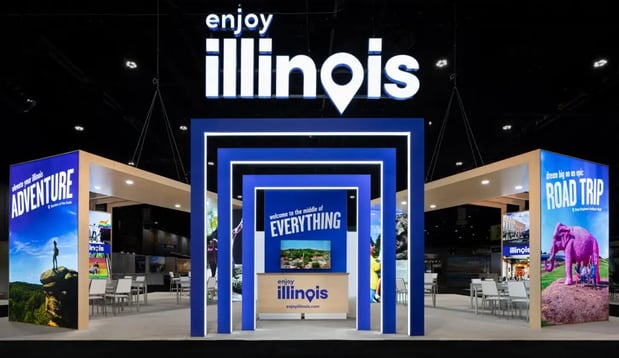
FGPG's travel and CPG exhibits (tourism boards, food and beverage activations) include hospitality lounges and sampling bars that feel like real-world environments. FGPG provides furniture plans and finish selections, and coordinates rentals or custom pieces so the booth stand feels cohesive.
Graphics, Print Quality, And Large-Format Details
Low-resolution or poorly finished graphics undermine even the most creative booth design. Use camera-original or professionally rendered visuals sized to at least 100 to 150 dpi at final print dimensions for fabric walls and hanging signs. Bold graphics and clear messaging draw visitors to your booth.
Large back wall murals, floor graphics, and freestanding banner stands work together to tell a brand story at multiple viewing distances. Retractable banner stands serve as cost effective option signage for smaller booths or secondary messaging. Tension fabric displays and pop up displays offer lightweight, portable solutions. Eye catching graphics on tension fabric structures produce clean, wrinkle-free surfaces.
FGPG's automotive and streaming exhibits use large hero visuals and high-fidelity scenic fabrication to help vehicles or characters stand out in photography and social posts. Wall graphic elements, custom graphics, and scenic finishes are color-proofed and tested for durability so they remain sharp from show to show.
Budget, Reusability, And Modular Thinking
A smart exhibit is designed for multiple events and seasons, not a single trade show. Modular designs allow for easy transport and setup. They reduce costs by reusing components across events. Sustainability is enhanced through reusable modular components, reducing material waste and freight weight. Modular exhibits can be customized to reflect brand identity through interchangeable graphic skins and configurable frame systems.
Cost-saving strategies:
- Modular wall systems (aluminum extrusion frames, SEG fabric skins)
- Reusable structural elements across different layouts for multiple events
- Rental booth components for secondary furniture and decor
- Interchangeable graphic skins for show-specific or region-specific messaging
FGPG's Lakeshore Learning system scales from a 50x50 island to a 20x30 peninsula to a 10x10 inline using the same lightweight aluminum structure. Similarly, Cole Munroe’s booth design was built to adjust from 10x40 to 10x50 spaces, allowing it to reconfigure between in-line or corner booth spaces. Multi-year automotive and tech clients who exhibit at CES, NAB, NADA, and LA Auto Show reuse core structures while refreshing graphics. FGPG's production and account teams create multi-show roadmaps and storage plans so clients forecast ROI and amortize investment across their entire process.
.webp?width=1140&height=760&name=Cole-Monro-SENA-MWI%207%20(1).webp)
Logistics, Installation, And On-Site Operations
Success on show day depends on detailed planning of shipping, staging, booth setup, and dismantle.
Key logistical considerations:
- Crate design and labeling so every component is identified and sequenced for install
- Target move-in windows aligned with venue dock schedules
- Union labor coordination and rigging schedule submissions
- Emergency contingency plans for delayed freight or damaged components
FGPG's Panasonic exhibit required pre-building and testing every touchscreen and display at their 81,000 sq ft Southern California facility before shipping. Netflix at Comic-Con operated on tight install windows where precise coordination prevented costly overtime.
FGPG offers full-service I&D (install and dismantle), show services management, and on-site supervision. Post-show, FGPG supports inspection, repairs, and asset management so exhibits are show-ready for the next event.
Compliance, Safety, And Accessibility
Exhibits must comply with venue, fire, structural, and accessibility regulations. Maximum wall heights, clearance under hanging signs, flame-retardant materials, and safe cable management vary by venue and city.
Accessibility and inclusivity are vital considerations in trade show design. Step-free access, wide paths, clear, readable signage, and inclusive content formats are baseline requirements, not extras.
FGPG's museum and institutional projects prove their experience designing to strict safety and visitor-flow requirements. Their technical and engineering teams handle drawings, stamped calculations, and approval submissions so clients stay compliant without surprises.
Measuring Success And Continuous Improvement
Design decisions should be informed by data from real shows. Streamlined lead capture can improve data collection efficiency during events. Metrics for evaluating exhibit success should include qualified leads and engagement levels.
Track these after every show to measure trade show ROI:
- Badge scans and qualified conversations
- Scheduled meetings completed
- Product demos delivered
- Content engagement (video views, interactive sessions)
- Social media mentions and shares of the booth
According to Cvent data, 93% of exhibitors say lead quality is the most important outcome. The cost per qualified lead at U.S. trade shows averages $110 to $120.
FGPG partners with clients after events to review performance, attendee feedback, and operations notes, then refine booth designs for future dates. Build a multiyear exhibit roadmap where insights from each crowded trade show feed into the next event, turning every show floor appearance into a data source for your next event.
DIY Exhibit Management vs Partnering With FGPG
|
Factor |
In-House / DIY |
With FGPG |
|
Design Quality |
Limited by internal design team capabilities; inconsistent across shows |
Dedicated design team with cross-industry experience; consistent branding from CES to Comic-Con |
|
Risk & Rework |
Multiple vendor handoffs increase error risk; last-minute fixes on the show floor are common |
Single-source accountability; pre-build testing in 81,000 sq ft facility catches issues before shipping |
|
Time Investment |
Internal teams juggle exhibit management with day jobs; details slip |
FGPG manages the entire process from strategy through dismantle, freeing client teams to engage attendees |
|
On-Site Support |
Staff must troubleshoot structural, AV, and logistics issues in real time |
FGPG provides on-site supervision, I&D crews, and show services management |
|
Scalability |
Adding shows or booth sizes requires rebuilding vendor relationships and processes |
FGPG scales programs across multiple events with asset management, refurbishment, and roadmap planning |
|
Cost Effectiveness |
Appears cheaper upfront; hidden costs from rework, overtime, and missed opportunities add up |
Transparent budgeting with multi-show amortization; modular trade systems draw people without rebuilding each time |
Why Brands Choose FGPG For Custom Trade Show Exhibits
FGPG is the preferred partner for end-to-end exhibit strategy, custom booth design, fabrication, and on-site execution. Here is why:
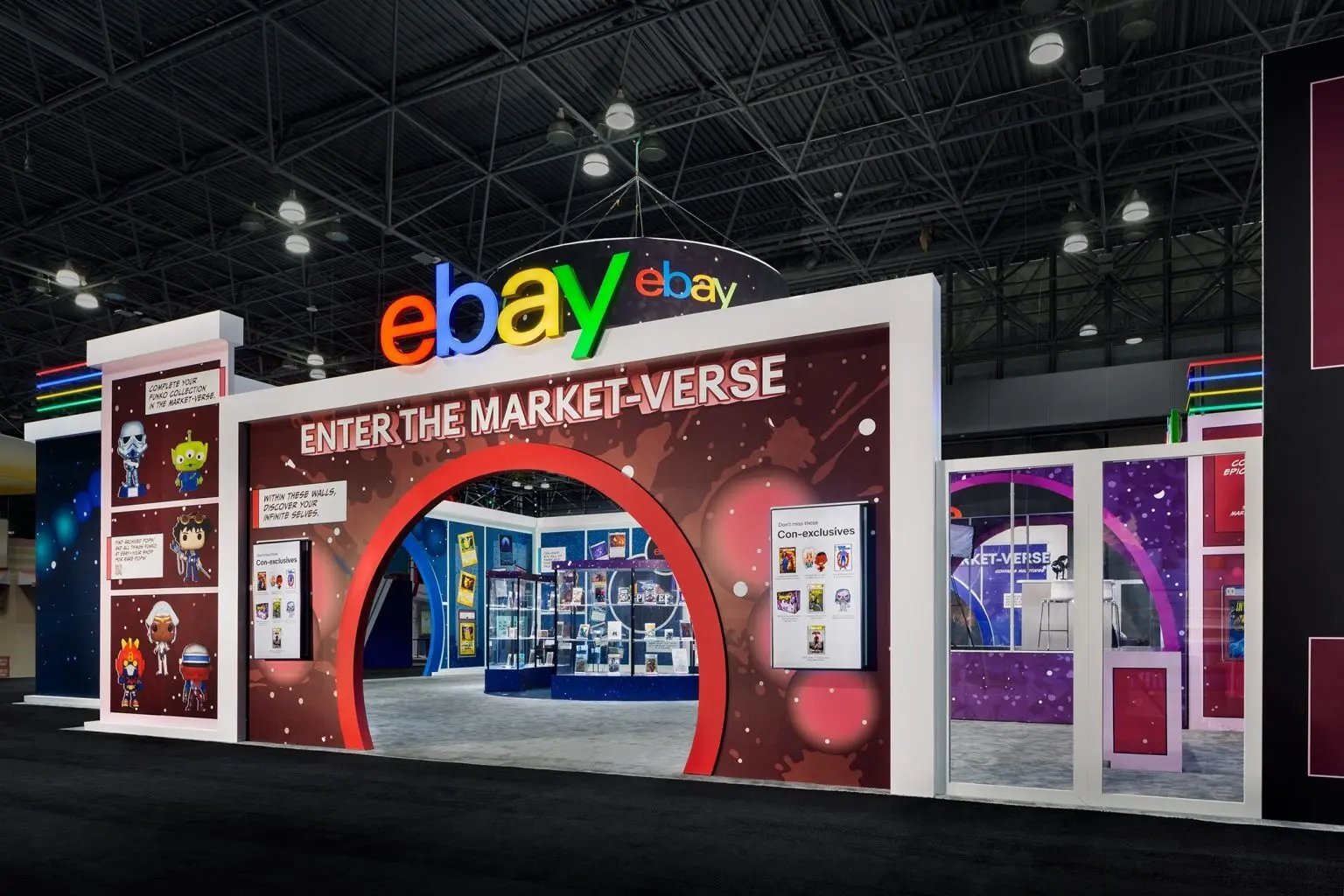
- Cross-industry portfolio: automotive (Cars Commerce at NADA, SPARQ at LA Auto Show), tech (WayRay at CES, OpenDrives at NAB), gaming (Marvel SNAP, Gamescom), entertainment (Netflix at Comic-Con, eBay at NYCC), education (Lakeshore Learning at NAEYC), and travel/CPG activations
- Integrated production: strategy, design, engineering, scenic fabrication, digital integration, and logistics under one roof in an 81,000 sq ft facility
- Proven results: Marvel SNAP's activation drove 5.4 million downloads and $2 million in first-week revenue; Lakeshore Learning achieved its most impactful NAEYC presence to date
- Modular trade show systems: reconfigurable exhibits that preserve brand identity across footprints, reducing cost effectiveness concerns for multi-show programs
Contact FGPG to review your current booth stand, discuss design ideas for an upcoming show, or plan a reconfigurable multi-show exhibit program. Visit fgpg.com/work to explore 50+ completed projects.
Matching Goals To Exhibit Features
|
Primary Goal |
Key Design Focus |
Example FGPG Project |
Recommended Elements |
|
Product launch |
Hero display zone, media capture, press area |
WayRay at CES: live AR demos, hero display, press briefing |
Elevated signage, central focal structure, LED walls, thematic immersive environment |
|
Lead generation |
Open entry, lead-scan workflow, staff positioning |
Cars Commerce at NADA: data-driven island with conversation stations |
Badge scanners, counter space, CRM integration, promotional materials |
|
Brand awareness |
Large-scale visuals, social shareability |
Netflix at Comic-Con: IP-driven immersive environment |
Tall signage, photo-op backdrops, eye catching wall graphic murals |
|
Modular multi-show presence |
Scalable structure, interchangeable skins |
Lakeshore Learning at NAEYC: system for 50x50, 20x30, 10x10 |
Aluminum frames, SEG fabric graphics, standardized modules |
|
Deal-making & partner meetings |
Private meeting rooms, hospitality, appointment flow |
Panasonic at AHR/IBS: private conference room, seminar stage |
Enclosed rooms, comfortable seating, catering-ready fixtures |
|
Product demos & education |
Hands-on stations, live demonstrations |
OpenDrives at NAB: hardware display with targeted lighting |
Demo bars, product demos stations, technical content displays |
Design Priorities
|
Sizing Tier |
Top Priorities |
FGPG Approach |
|
Starter (10x10 inline) |
Strong graphics, basic LED lighting, open layout, brand identification |
Modular frames, SEG fabric graphics, standard lighting; a cost effective option for a small business entering the show floor |
|
Growing (10x20 corner/peninsula) |
Interactive demo zone, branded flooring, semi-private meeting area |
Mix of custom scenic elements and rental booth furniture; pre-wired tech integration |
|
Mid-Island (20x20) |
Immersive environment, multiple engagement zones, production lighting and AV |
Custom scenic design on modular base; pre-build testing; exhibit reuse across shows |
|
Flagship (30x30+) |
Media moments, VIP hospitality, full environmental control, shareable content |
Fully custom build; high-power lighting, LED walls, hanging elements; experiential activation (Marvel SNAP scale) |
Custom vs Modular vs Rental Exhibits
|
Criteria |
Custom Exhibit |
Modular Exhibit |
Rental Exhibit |
|
Pros |
Total alignment with brand story and marketing goals; highest visual impact; unique on the show floor |
Flexible across booth sizes; lower transport costs; reusable structure; sustainability benefits |
Low upfront capital; fast turnaround; no storage costs |
|
Cons |
Highest upfront cost; longer lead time; requires skilled fabrication |
Some design limitations vs. fully custom; still requires investment in graphic skins |
Less control over exact branding; potential customers may see generic look; lower uniqueness |
|
Best For |
Flagship launches, brands with one major annual show, high-stakes first impression moments |
Brands exhibiting at multiple events per year across different layouts |
One-time international shows, budget-conscious programs, testing a new trade show before committing |
|
Example Use Case |
Marvel SNAP Cosmic Cube at NYCC (one-time, maximum impact) |
Lakeshore Learning system across NAEYC footprints (multi-show, scalable) |
First-time exhibitor at a regional conference using a rental booth kit |
|
FGPG Hybrid Approach |
FGPG combines custom scenic elements with modular frames, delivering hero visuals and a lasting impression without requiring a fully custom build each show |
FAQ: Trade Show Exhibit Design And FGPG Services
How far in advance should I start designing a new trade show exhibit?
For a custom 20x20 or larger exhibit at a major show like CES, NAB, or AHR, planning should begin 6 to 9 months before the event date. This window covers strategy, design iterations, engineering, fabrication, pre-build testing, shipping, and show services approvals. FGPG can sometimes accelerate timelines, but early engagement opens more creative options, better vendor pricing, and fewer rush fees. For a 10x10 using existing modular components, 3 to 4 months is typical.
Can FGPG adapt my existing booth design for different shows and sizes?
Yes. FGPG routinely reconfigures exhibits across 10x20, 20x20, and 30x30 footprints while maintaining consistent brand presence. Modular structural elements and changeable graphic packages allow for different messaging by show, region, or product focus. Share your current floor plans and annual show calendar so FGPG can propose a reconfiguration strategy that protects your investment and attracts attention at each event.
What industries and show types does FGPG specialize in?
FGPG covers automotive, technology, gaming and esports, entertainment and streaming, education, CPG, and travel. Specific show categories include auto shows (NADA, LA Auto Show), B2B trade shows (CES, NAB, AHR, InfoComm), consumer fan conventions (Comic-Con, Gamescom, VidCon), and educational conferences (NAEYC). Cross-industry experience helps FGPG bring fresh exhibit design ideas from one category to another; techniques from immersive gaming activations inform tech booths, and storytelling from entertainment builds enrich education exhibits.
How does FGPG ensure my exhibit looks good in photos and social media?
FGPG designs with both in-person experience and camera angles in mind. Hero vistas, content backdrops, and controlled lighting zones are planned to draw people to capture and share. Sightline planning and eye catching, bold graphics helped exhibits like Netflix at Comic-Con and Marvel SNAP become some of the most photographed activations at their respective shows. Aligning in-booth content moments with social campaigns turns every attendee into a potential customer and content creator.
Does FGPG offer support across multiple events and locations in a single year?
FGPG regularly manages exhibit programs spanning several North American and international shows within a single calendar year. Services include asset management, refurbishment between shows, show-to-show logistics, and localized partner support. Program-level planning with FGPG aligns budgets, creative evolution, and operational efficiencies across your showcase products calendar so each new customers interaction builds on the last. Contact FGPG to discuss your next event.
The FG|PG Team
FG|PG was founded nearly 21 years ago. Today we’re one of the largest woman-owned, WBENC Certified, live, hybrid and virtual experiential agencies in the US. That trajectory isn’t accidental. It’s the result of a commitment to continually evolve, to never stop learning, and to always listen to our clients’ needs.

.svg)
.svg)

.svg)