
Fan Service, Not Fan Spend: How FGPG Creates Experiential Marketing at Comic-Con
Comic-Con is not a conventional marketing environment. It is a live, breathing fandom ecosystem where attention is earned through immersion, not volume. The sister show in Anaheim plays by similar rules — our breakdown of the best designs at WonderCon explores the small-footprint side. Brands that succeed here understand that spectacle alone is not enough. The experience must feel authentic, intentional, and built for the audience.
In this guide, we break down how we build high-performing activations:
- Starting with fan emotion, not booth size
- Centering the experience around one unforgettable hero moment
- Using environmental control to shape immersion
- Designing for both cameras and crowd flow
Each principle builds on the next, beginning with the most important shift in experiential marketing for Comic-Con: designing for the fan first.
Why Experiential Marketing for Comic-Con Must Start With the Fan, Not the Footprint
The most effective experiential marketing for Comic-Con activations begin with emotion, not square footage. If you design for how fans feel, the physical footprint naturally follows.
Comic-Con audiences behave differently from traditional trade show attendees. For brands planning Comic-Con activations, our dedicated services page outlines the strategic approach. They are not comparing features or scanning badges. They are stepping into worlds they care about. That shift changes everything. Planning conversations move away from layout diagrams and toward memory design. Instead of asking how much space we have, we ask what the space should do.
Before concepting begins, we ground every activation in three strategic questions:
- What moment should fans feel when they enter the space?
- What makes that moment believable?
- How will fans capture and share it without being prompted?
These questions anchor creative decisions and keep teams aligned.
What Fan-Centric Marketing Looks Like in Practice
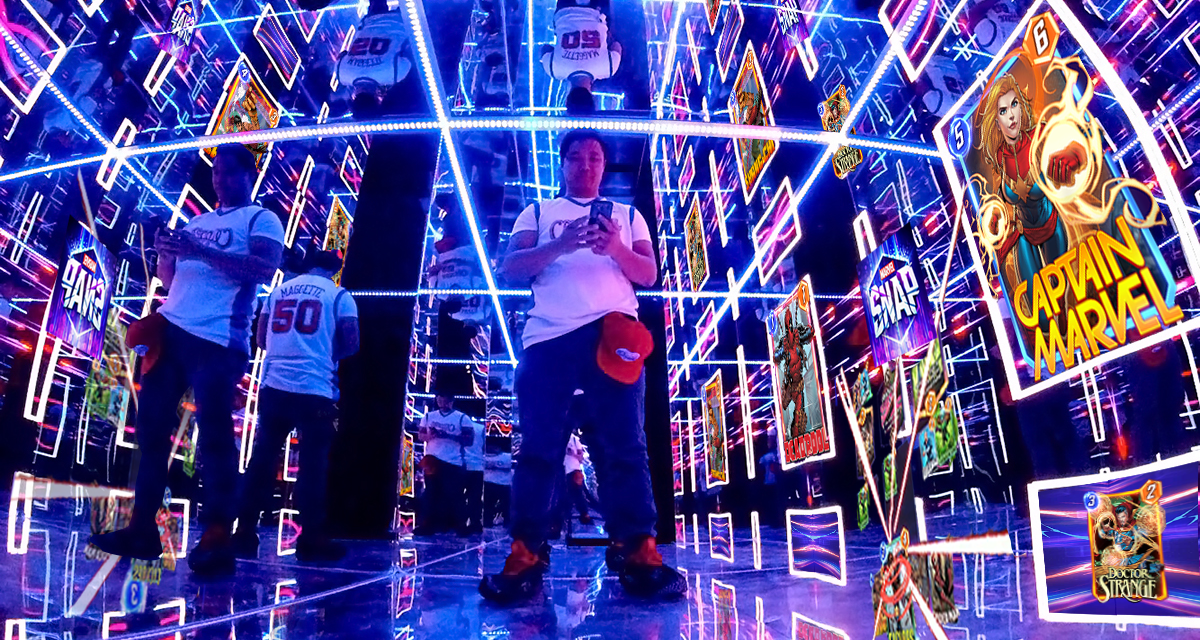
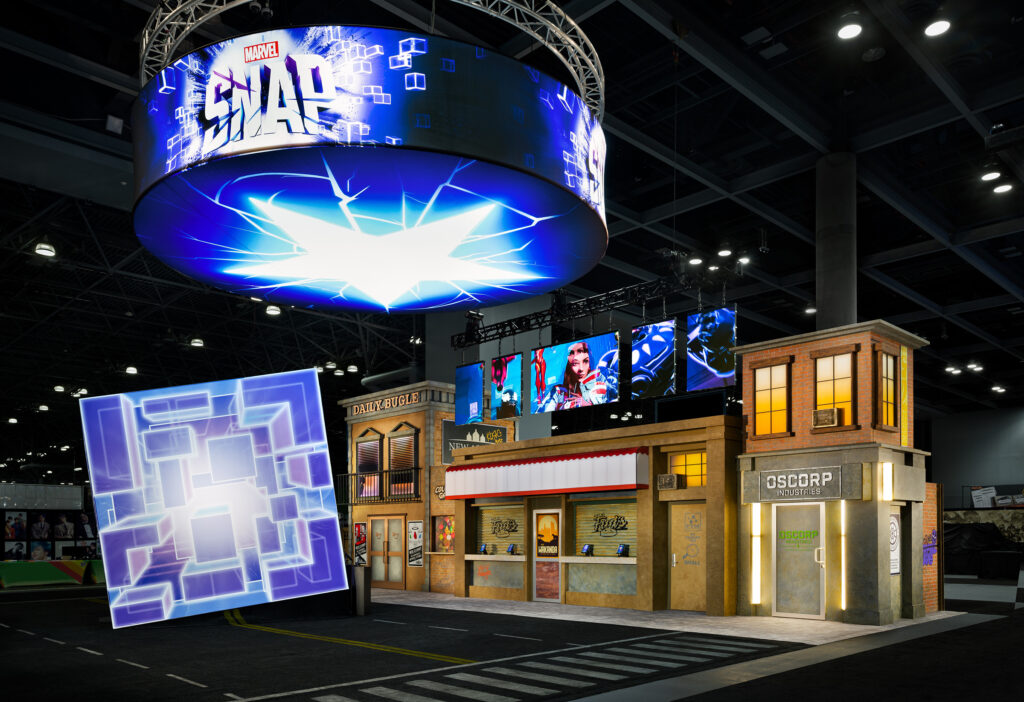
For the Marvel Snap launch at New York Comic Con, the goal was simple: transport fans into the game’s multiverse. The Cosmic Collector’s Cube was not just scenic decor. It was a controlled, mirrored environment layered with screens and synchronized audio. Once inside, the show floor disappeared. Attendees instinctively recorded and shared because the experience delivered a clear emotional payoff.
When fan behavior drives design, immersion feels earned rather than manufactured. And that discipline sets up the next critical principle: committing to one unforgettable hero moment.
Why Does One Hero Moment Outperform Five Good Ideas?
At Comic-Con, clarity wins. A single, dominant hero element will outperform a collection of competing concepts every time.
Fans make split-second decisions on the show floor. If the story is fragmented or visually noisy, they move on. The most successful activations anchor the entire footprint around one unmistakable centerpiece. Everything else supports it. Nothing competes with it.
Before design locks, we pressure-test every experiential marketing concept for Comic-Con against a simple filter:
- Can someone describe the experience in one sentence?
- Is there a clear visual focal point from 20 feet away?
- Does every secondary element reinforce that main idea?
If the answer to any of these is unclear, the concept gets refined.
Why the Cosmic Collector’s Cube Was Effective
At New York Comic Con, the Marvel Snap activation centered entirely on the Cosmic Collector’s Cube. The enclosure was the magnet. Lines formed because the visual promise was obvious. Step inside. Enter the multiverse. Record it. Share it.
When multiple ideas compete, none land cleanly. But when one hero moment leads, fans instantly understand what is worth the wait.
How Does Environmental Control Shape Emotion at Comic-Con?
Control the environment, and you control the emotional response. At Comic-Con, separation from the show floor is what turns curiosity into immersion.
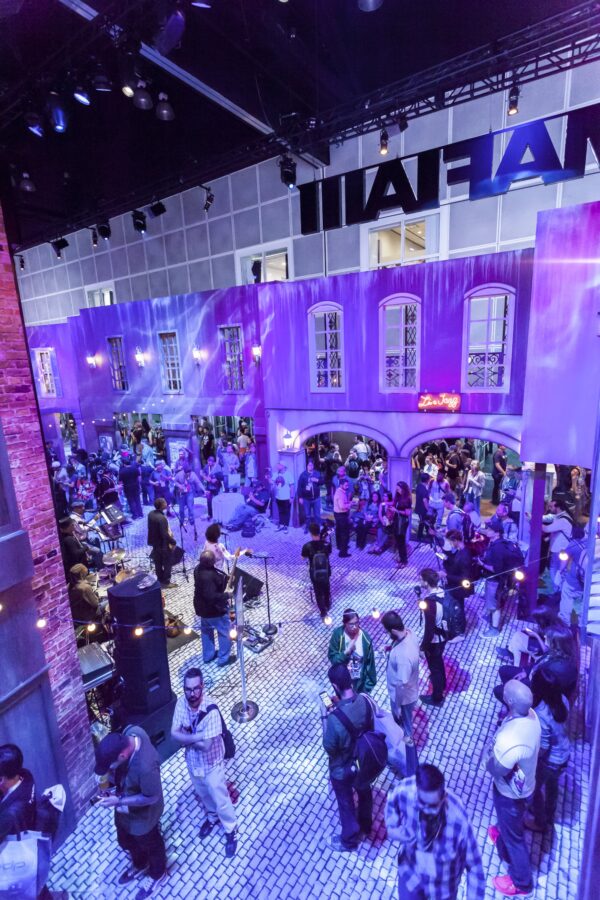
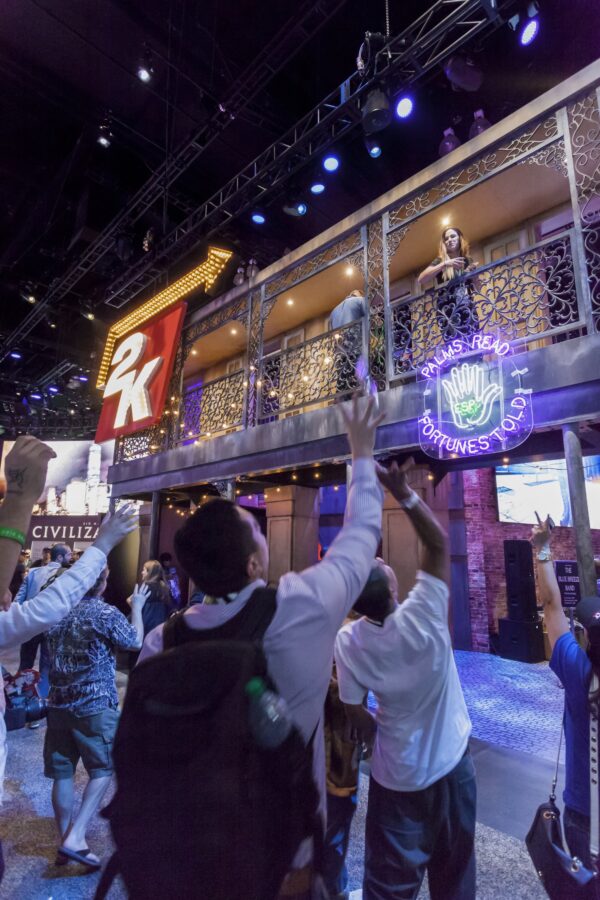
The convention hall is loud, bright, and visually crowded. The same control principle shapes our outdoor work — see how we approach summer pop-up experiences in unpredictable conditions. Open booths can attract attention, but fully immersive environments create focus. When you manage light, sound, and sightlines, you remove distraction. That separation increases dwell time and deepens engagement.
Why We Love Enclosures
Enclosed or semi-enclosed activations create a psychological threshold. The moment someone crosses it, the experience changes.
- Light is controlled instead of competing with overhead glare
- Sound becomes directional rather than drowned out
- Sightlines narrow to emphasize story and detail
- The outside world fades, even if only briefly
For the Marvel Snap launch, the Cosmic Collector’s Cube functioned as a total environment. Mirrored interiors, layered screens, and synchronized audio created a multiverse illusion that felt detached from the surrounding hall. The enclosure was not just decorative, but strategic.
Micro-immersion techniques can achieve a similar effect when full walls are not feasible. Even partial environmental control shifts emotion.
How Do You Design for Both the Camera and the Crowd?
If it doesn’t read on a phone screen, it doesn’t travel. And if it doesn’t handle crowd flow, it doesn’t last.
Experiential marketing for Comic-Con lives in two environments at once: the physical booth and the digital feed. Every detail must perform in both. That means designing not just for the human eye, but for vertical video, wide-angle selfies, and fast social sharing.
What “Camera-First” Design Actually Means
Before fabrication, we evaluate every activation through a lens test:
- Does the hero moment photograph clearly from multiple angles?
- Is lighting layered to flatter faces as well as scenery?
- Are sightlines clean, without visual clutter?
- Is there an intuitive “stand here” moment without signage overload?
These decisions determine whether content spreads organically or stalls.
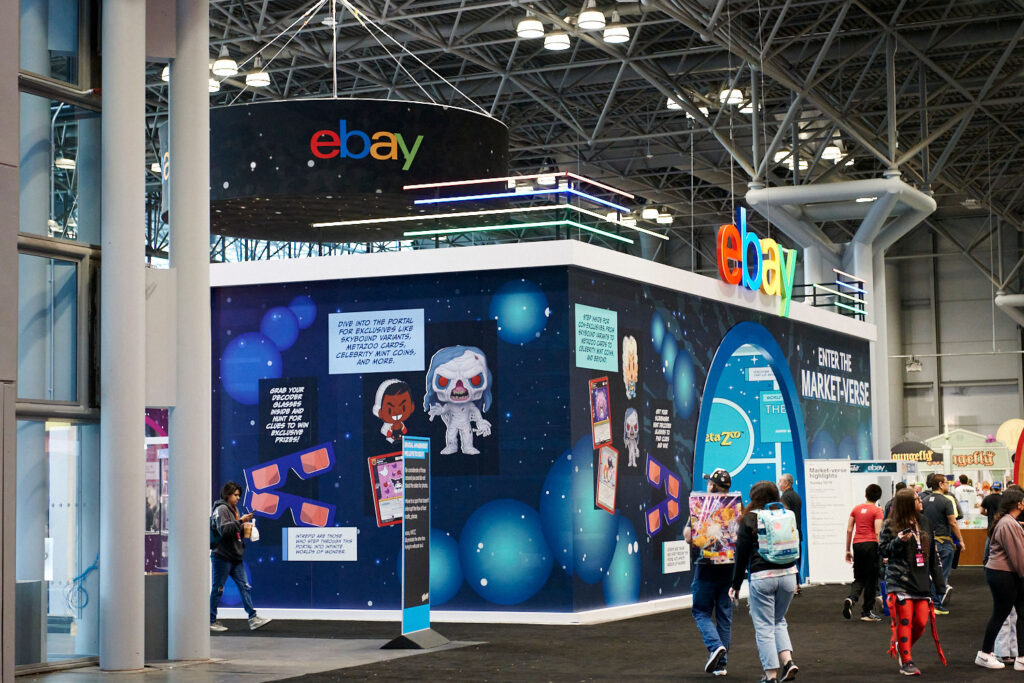
Operational flow is just as critical. At high-traffic conventions like Comic Con, unclear entrances, cramped interiors, or slow resets can collapse momentum quickly. The most effective experiential builds balance spectacle with throughput. Entry and exit paths are intentional. Reset points are streamlined. Staff is positioned to keep energy high and movement smooth.
The experience scales naturally when design respects both optics and operations. And that scale only works if the build itself can withstand real-world conditions.
Extending Experiential Marketing for Comic-Con Beyond the Show Floor
The best Comic-Con activations are not one-weekend events. They are launchpads.
When the doors close and the booth comes down, the real measurement begins. Social content circulates. Press coverage compounds. Download numbers or platform engagement reflect the on-site energy. The activation becomes fuel for a broader campaign.
After the Marvel Snap launch, the activation generated over 130 million media impressions and helped drive 5.4 million downloads in its first week. While the physical footprint disappeared, the momentum kept building.
Post-show strategy includes:
- Evaluating line length and throughput data
- Measuring earned media and organic reach
- Preserving modular elements for touring or reuse
When experiential marketing is designed with longevity in mind, its value compounds long after teardown.
FGPG’s Approach to Experiential Marketing for Comic-Con
Experiential Marketing for Comic-Con demands more than scale. It requires clarity, discipline, and a deep respect for fandom culture.
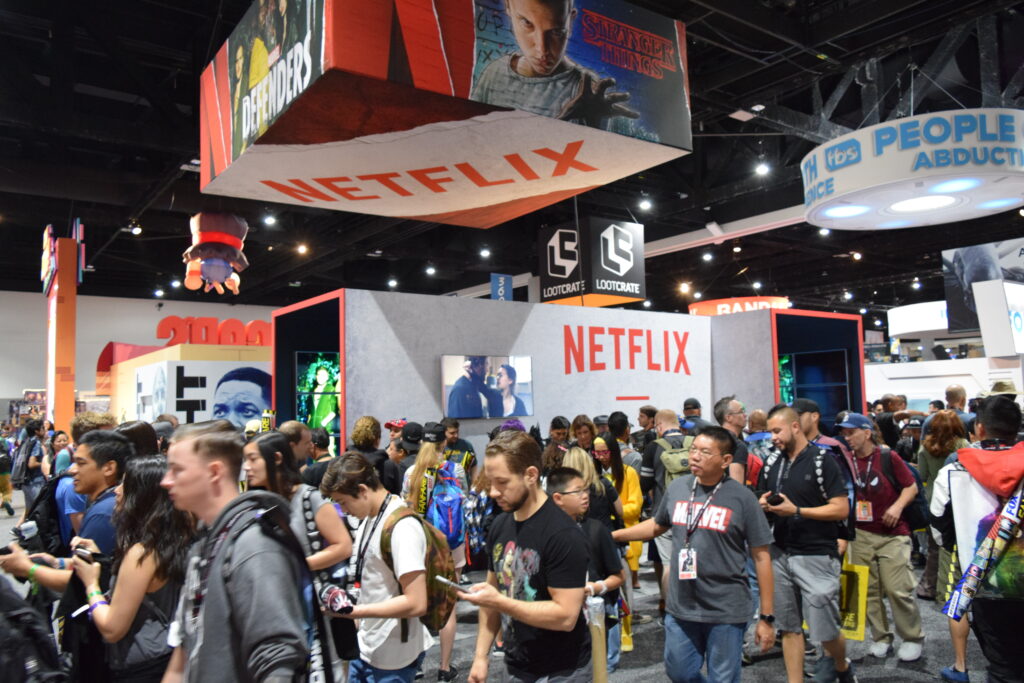
The strongest activations are built around a single, powerful idea. They control light and sound to shape emotion. They photograph beautifully, manage crowds seamlessly, and extend impact long after teardown. When those elements align, a booth becomes a destination.
If you’re planning your next Comic-Con activation, build something fans line up for. Build it with FGPG.
Quick Summary
Experiential Marketing for Comic-Con requires more than spectacle. It demands a fan-first strategy, a single dominant hero moment, environmental control, camera-ready design, and operational discipline. This guide breaks down how FGPG builds immersive activations that drive engagement on the show floor and measurable impact long after teardown.
FAQ Experiential Marketing for Comic-Con
-
1. What makes Experiential Marketing for Comic-Con different from traditional trade shows?
Comic-Con audiences are driven by fandom and immersion, not product specs or lead capture. Activations must create emotional, shareable moments rather than informational displays.
-
2. Why is a single “hero moment” important in Experiential Marketing for Comic-Con?
-
3. How do you measure success in Experiential Marketing for Comic-Con?