
“Totally Awesome” at the Petersen Automotive Museum: How FGPG Turned a Car Exhibit Into a Cultural Destination
Client: Petersen Automotive Museum | Venue: Petersen Automotive Museum, Mullin Grand Salon | City: Los Angeles, CA
The real challenge wasn’t designing an exhibit, it was expanding the audience.
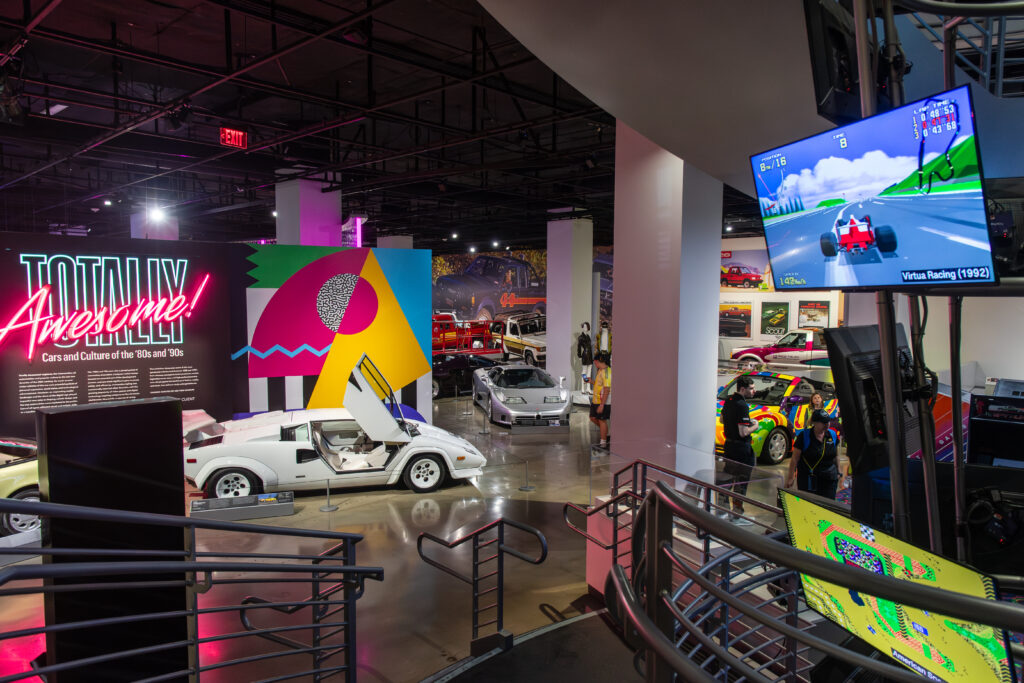
Automotive museums have a built-in audience problem. The car enthusiasts will always show up. The harder question, the one that determines whether an institution grows, is whether anyone else does.
The Petersen Automotive Museum came to FGPG with a brief that understood this clearly. “Totally Awesome” wasn’t conceived as an exhibit for car people. It was conceived as an experience for anyone who lived through the 1980s and 90s, or who wished they had. The vehicles operated as the anchor. The culture was the invitation.
That distinction changes everything about how you design a space. An exhibit built for enthusiasts showcases the car. An experience built for a broader audience uses the car to tell a story about who we were, what we wanted, and how an era’s ambitions shaped everything around it. In “Totally Awesome”, FGPG was tasked with doing both at once:
- Give automotive enthusiasts the curatorial depth and vehicle provenance they came for
- Give first-time and general visitors an immersive cultural experience that needed no prior knowledge to feel
- Hold both audiences in the same room — and keep them there
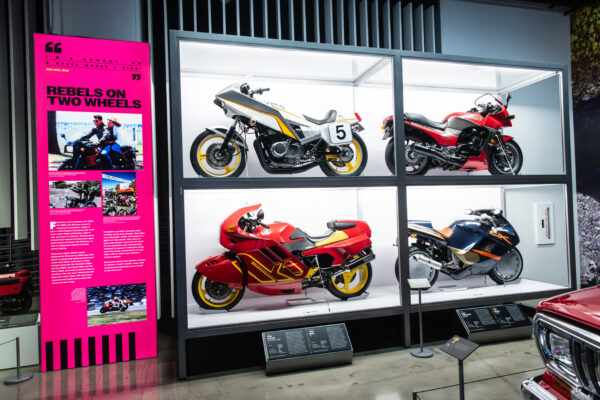
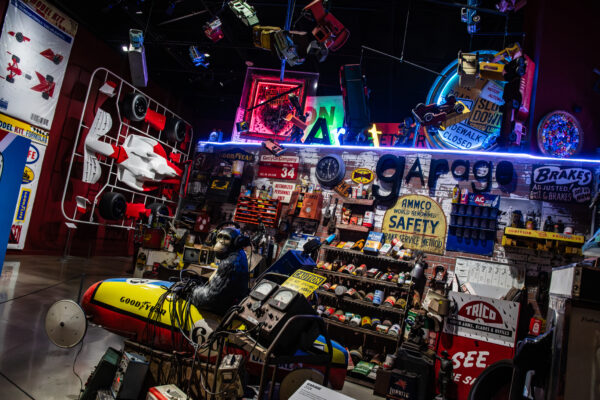
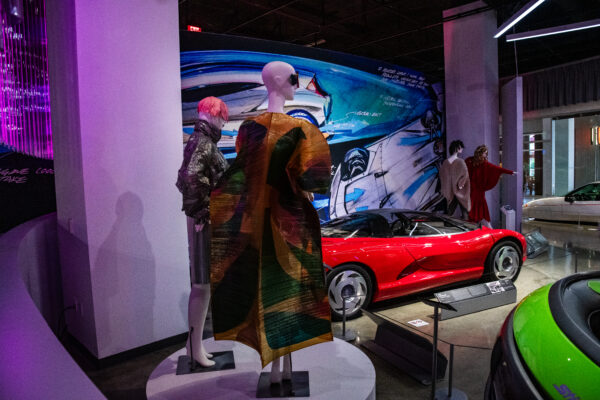
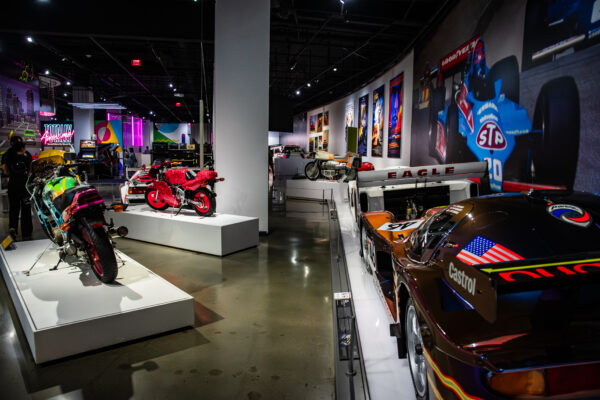
“Ritz Carlton in the 80s” is a commercial decision, not a design preference.
The Petersen gave FGPG an aesthetic direction specific enough to be genuinely useful: not a neon carnival, not a retro novelty shop with clip art. The exuberance of the decade runs through a filter of quality and restraint. That brief was a precise commercial calibration — a position between two audience failure modes, held together by elevated style curation.
An exhibit that tips into kitsch alienates the half of the audience that remembers the era with genuine affection. An exhibit that’s too reverent loses the general public who came for the experience, not the scholarship. Getting the balance right required sixteen rounds of graphic iteration across ten distinct sections — Zeitgeist, Concepts, Cars for the Masses, Supercars, Pop Culture, Film, TV, and the Arcade — with real neon, pastel wall treatments, and period-authentic materiality calibrated at every turn.
Every material choice was a brand decision. An exhibit that takes the era seriously earns the audience who remembers it.
The graphic strategy extended to how vehicles were contextualized. Information plinths throughout the sections gave enthusiasts curatorial depth without interrupting the experiential flow for visitors who didn’t need it. The exhibit operated at two speeds simultaneously: immersive for the casual visitor, educational for the enthusiast.
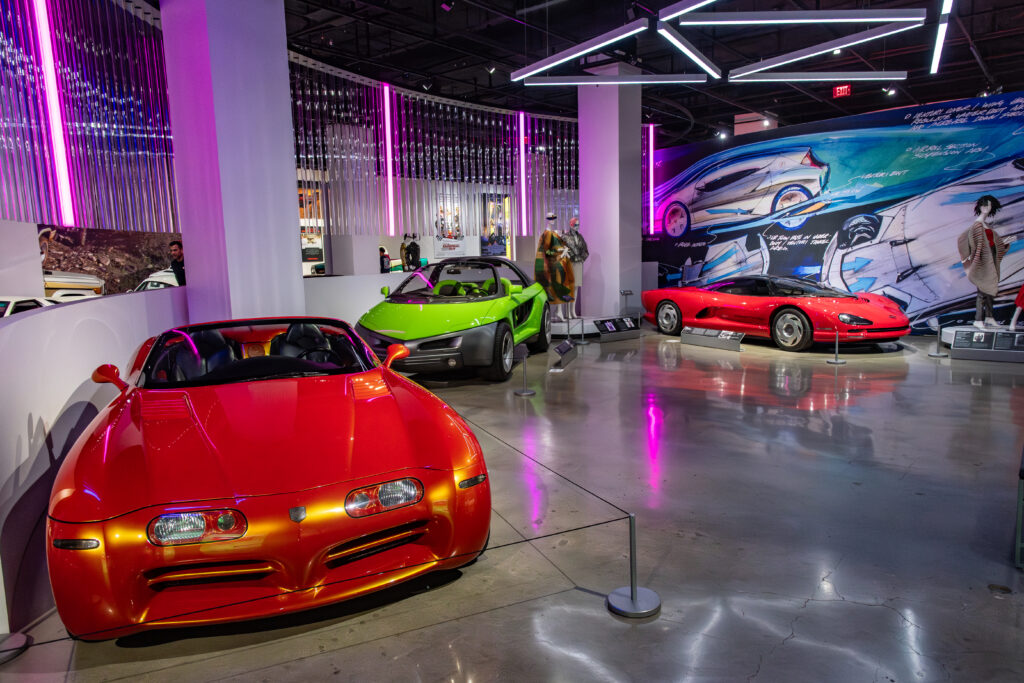
The build served the strategy. Every element had a reason beyond itself.
The narrative arc was engineered into the floor plan.
The suggested path moved visitors from the Lobby and Intro through thematic zones, including: Zeitgeist, Concepts, Cars for the Masses, Supercars, Pop Culture, Film, TV, and the Arcade, each designed to deepen the story rather than simply continue it. Dwell time isn’t accidental in a well-designed experiential environment; it’s engineered from the floor plan outward. The 1983 Ford Probe IV sits alongside period music videos and a Walkman because in 1983 those things existed in the same cultural moment, and the spatial design makes that felt before any plinth explains it.
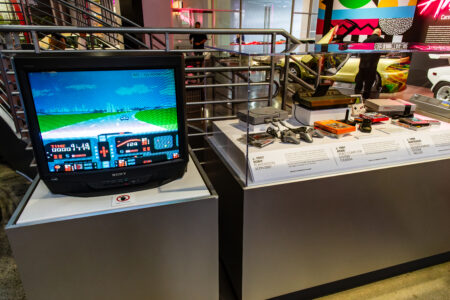
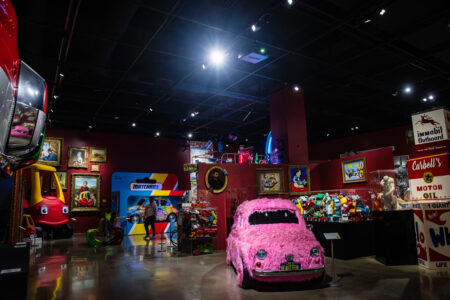
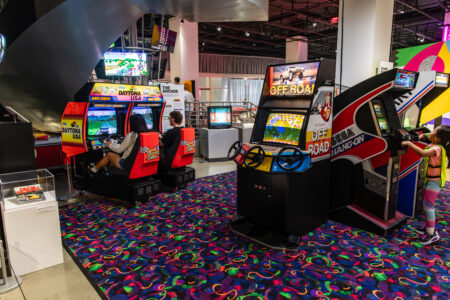
Interactivity was the point, not an add-on.
The exhibit closes with a fully functional arcade that served three strategic purposes:
- Extend dwell time beyond the vehicle displays
- Generate organic social sharing throughout the run
- Create the cross-generational moment the Petersen’s brief called for
Playable classic consoles, sit-down motorcycle games, and stand-up arcade units were followed by a Y2K transition that closed the narrative loop — a design choice that made the exhibit’s end feel earned rather than arbitrary.
The vehicle lineup held together because the framework was cultural, not taxonomic.
The Back to The Future Delorean, the 1984 Pac-Man Rod, and the Ferrari 250 GT California Spyder replica from Ferris Bueller’s Day Off don’t appeal to the same person. They appeal to entirely different audiences. An exhibit designed around cultural context rather than automotive taxonomy, was the only framework that could hold all of them in the same room with equal credibility, and draw more than 30 additional iconic vehicles into a single coherent story.
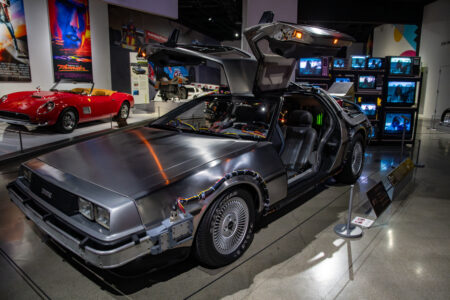
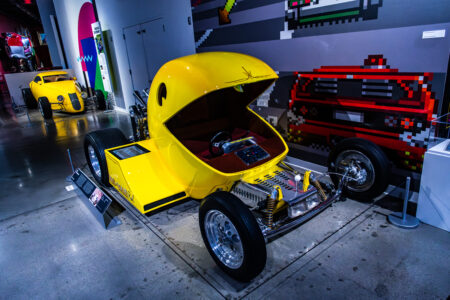
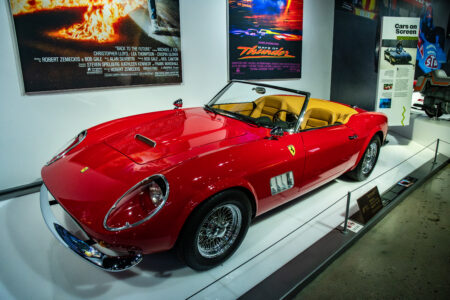
300,000 projected visitors. Coverage across automotive, design, and general press. The brief was answered.
“Totally Awesome!” opened to immediate critical and public response, with coverage in Hagerty, The Autopian, NBC Los Angeles, and DuPont Registry. That spread matters. Automotive titles covering a Petersen exhibit are expected. General interest and broadcast media covering one is the signal that the audience expansion strategy worked.
The functional arcade and interactive elements drove consistent social sharing throughout the run, extending the exhibit’s reach well beyond the Mullin Grand Salon. Executive Director Terry L. Karges described it as a “full sensory time machine” — a description that reflects the fabrication outcome as much as the curatorial one. When institutional leadership reaches for that kind of language, it means the physical environment matched the ambition of the brief.
“Totally Awesome!” is FGPG’s ninth collaboration with the Petersen Automotive Museum, a partnership that has now spanned multiple flagship installations in the Mullin Grand Salon.
Let’s talk about your exhibit program.
Frequently Asked Questions
-
How does FGPG approach an exhibit brief that needs to serve both enthusiast and general audiences?
The starting point is always the audience the institution is trying to grow, not just the one it already has. From there, we develop a narrative architecture and spatial flow that works at two speeds simultaneously, giving enthusiasts the depth and specificity they came for, while giving casual visitors an experience that doesn’t require prior knowledge to feel. When those two goals are resolved at the floor-plan level, the exhibit serves both audiences without compromising either.
-
What role does budget strategy play in a large-scale museum exhibit?
-
Does FGPG work with cultural institutions and museums beyond one-time exhibit builds?