
Creativity in Confinement: The Best Designs at WonderCon
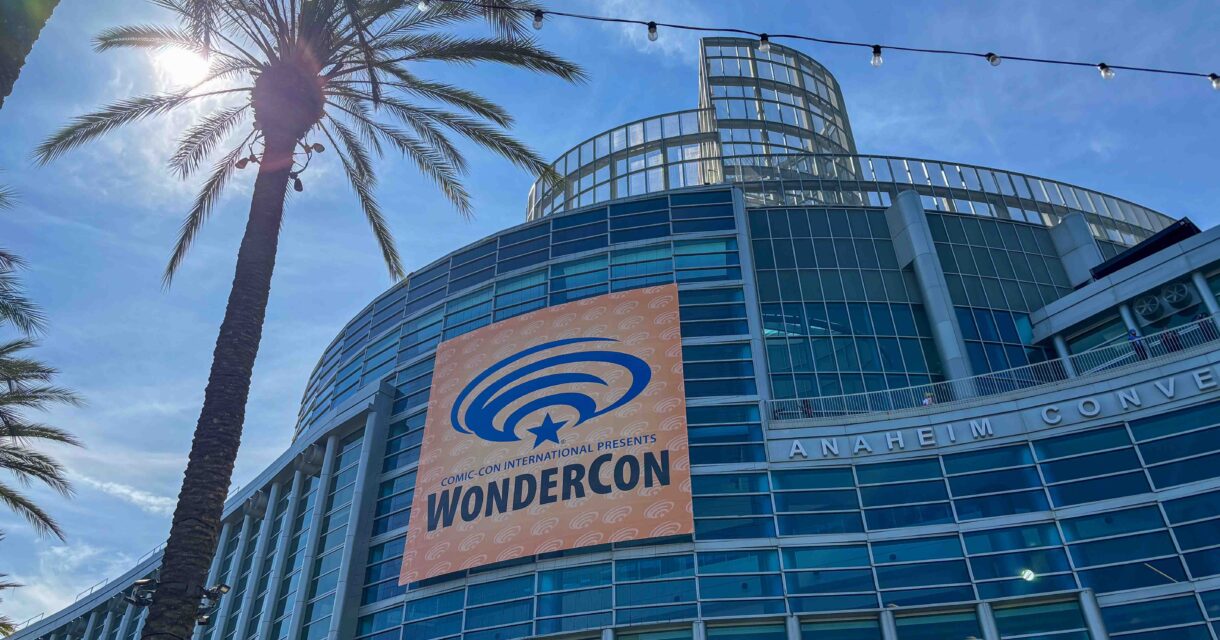
WonderCon doesn’t have the same footprint as its bigger sister, Comic-Con, down in San Diego. It doesn’t need to. The Anaheim-based convention has its own history — there was a stretch in the mid-2000s, back when the show called San Francisco’s Moscone Center home, where studios treated it as a legitimate launch platform. Spider-Man 2, Batman Begins, and Watchmen — major films used it to get in front of exactly the audience that would become their loudest champions. That era faded when the show moved south, and the big theatrical moments migrated even further south to SDCC.
What WonderCon became instead is more interesting for a specific type of attendee. Its scrappier, more artist-centric energy brings a show where indie creators, small-batch toy makers, and passion-project brands rub elbows in typically smaller spaces. Artist’s Alley isn’t a side feature here — it’s the main event, a sprawling stretch of talent where you’re as likely to discover your next favorite artist as you are to find a licensed property you already love. The cosplay spills out into the plaza in front of the convention center, becoming its own scene entirely. The occasional larger studio activation will appear — Send Help brought a full escape room to the floor this year — but WonderCon mostly focuses on artistry rather than serving as a platform for the next product launch or studio release that larger shows are built to carry.
This is a show that rewards the explorer. You find things here. They don’t find you. And that’s exactly why the booth design conversation at WonderCon is one worth having — because when you’re working in a smaller footprint with a more discerning crowd, every decision shows.
Small Space, Big Personality
Artist-focused cons like WonderCon inspire constraint-based creativity. Most exhibitors are working within small footprints. A 10×10 footprint is roughly the size of a large walk-in closet, and to be the best on the aisle, they have to build an entire world that grabs attention. The booths that succeed don’t try to cram everything in. Instead, we noticed that the best designs picked a lane and went all the way down the road. Whether that’s a tight visual theme, clever use or vertical space, the best small booths are edited. Intentional. The ones that don’t work result in a design looking like a packed van.
Ragmop & Goose: The Corner That Became a Stage
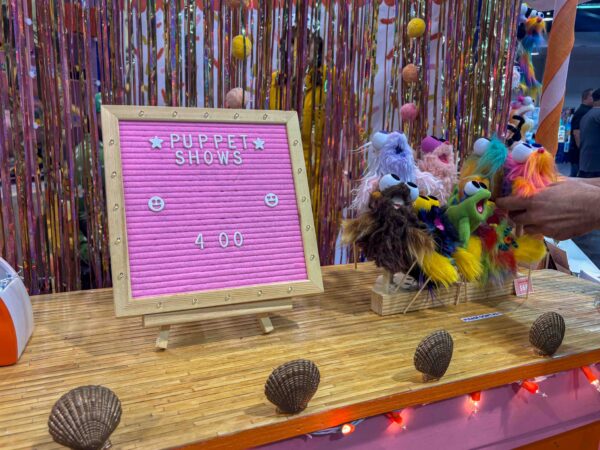
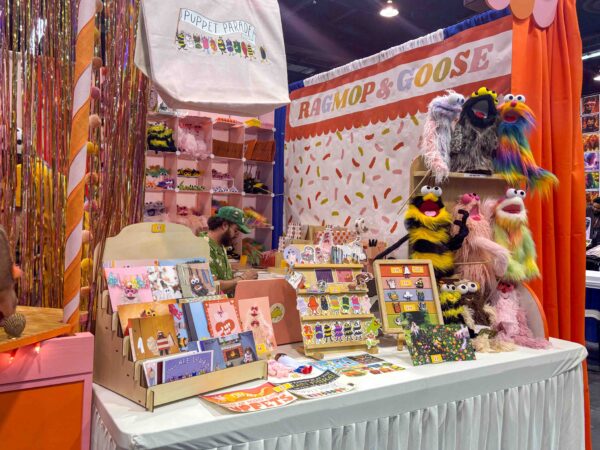
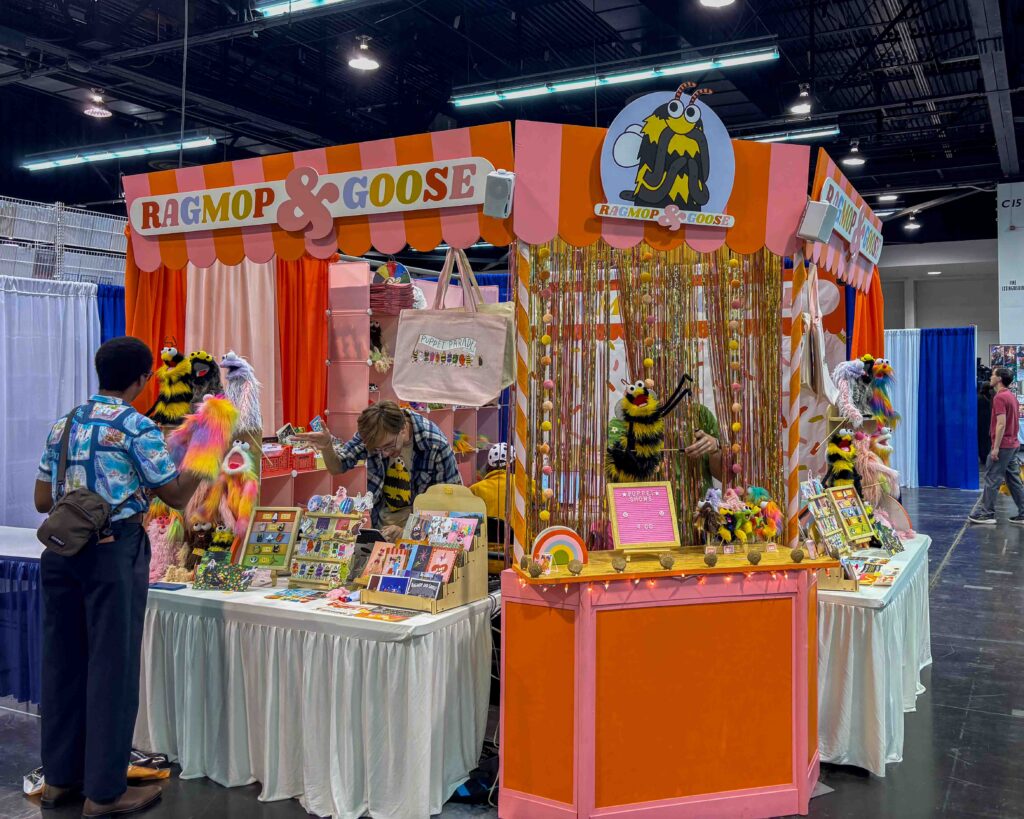
One of the sharpest small-footprint executions on the floor belonged to Ragmop & Goose, a puppet-maker who used their corner space to do something most exhibitors never think to try: they turned the corner itself into a stage.
Instead of merchandising all available wall space, they ran a puppet show from the front corner of the booth — turning what’s typically wasted transitional square footage into the single most attention-grabbing moment in their section of the floor. The performance drew a crowd. The crowd created social proof. The social proof made the merch worth exploring.
The whole design was built around one insight: at a show like this, entertainment is the booth.
Rokimoto: Gashapon Energy in a 10×20
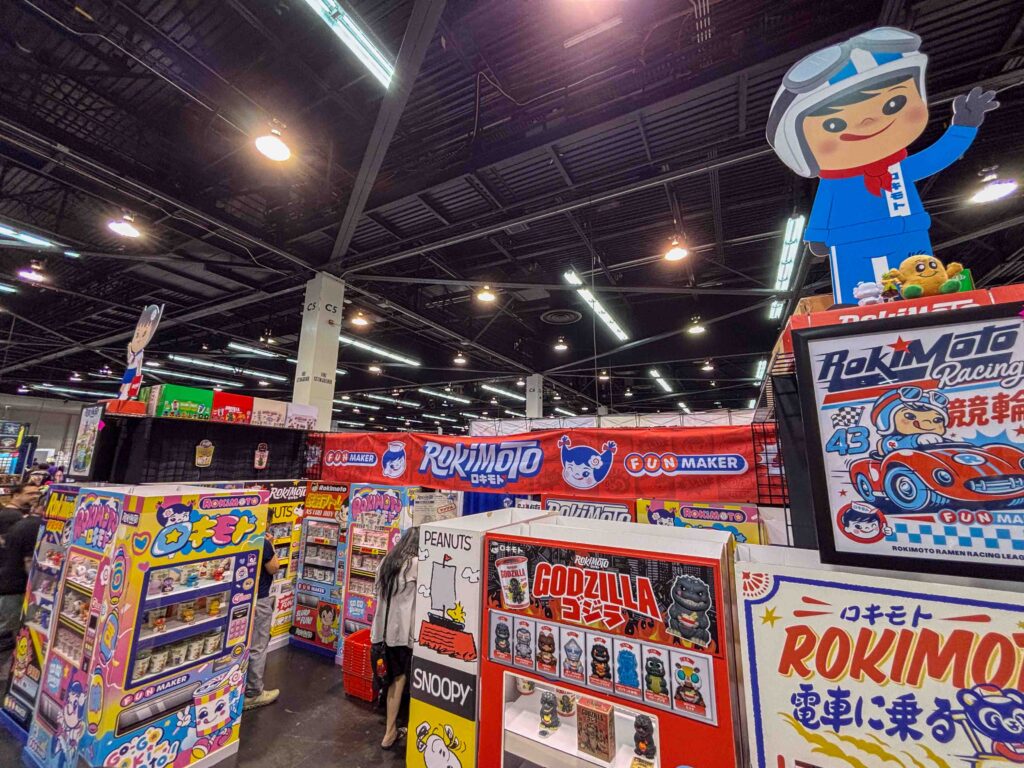
Rokimoto came in with a 10×20 and made it feel like a Japanese arcade. The booth leaned hard into gashapon machine aesthetics — bright primary colors, mascot characters everywhere, the visual language of capsule toy vending elevated into a full retail environment.
This is what a 10×20 can be when you commit to a concept. The extra 100 square feet wasn’t just more space — it was enough room to tell a complete story. You understood immediately what Rokimoto was, what they valued, and why their products were worth your attention. People were stopping in the aisles to photograph the booth before they’d even gotten close enough to read the signage.
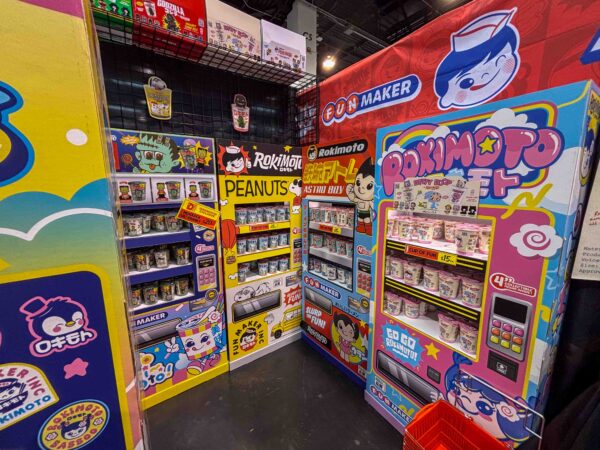
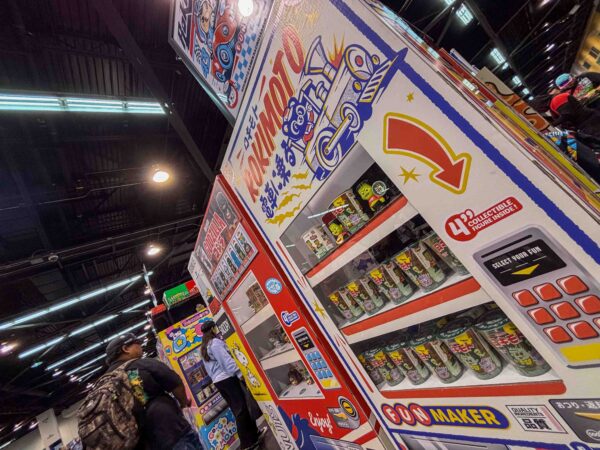
Jeff Granito: The Enchanted Tiki Booth
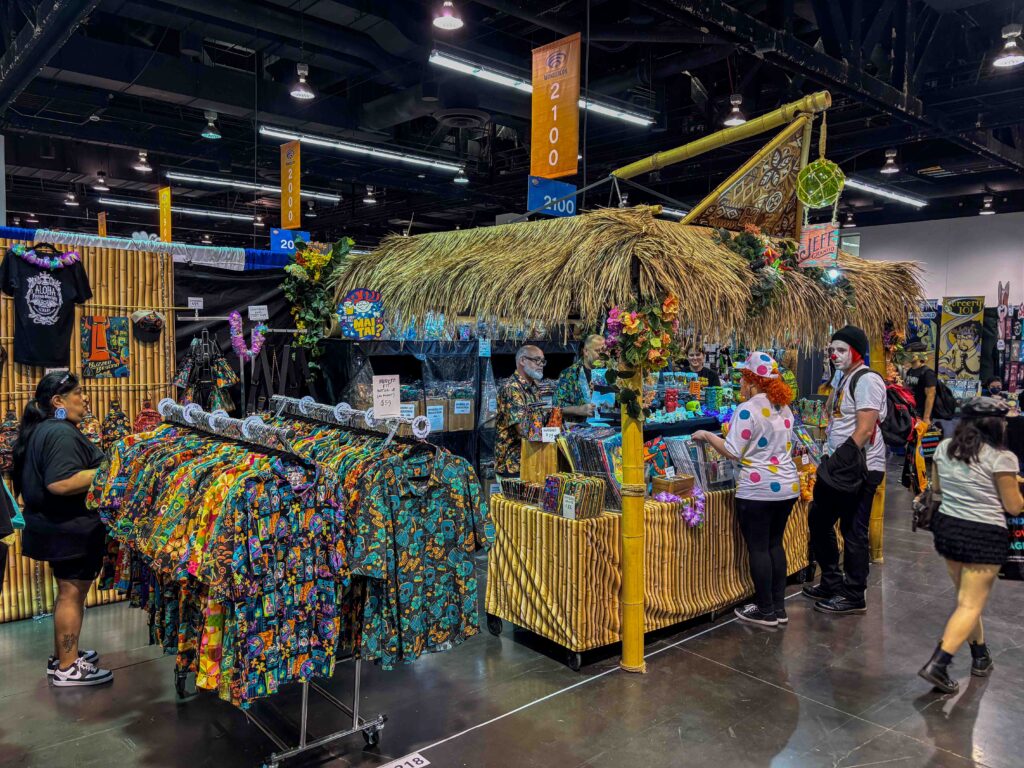
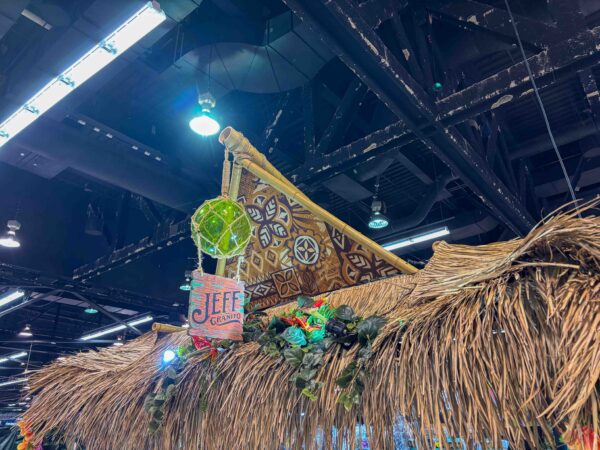
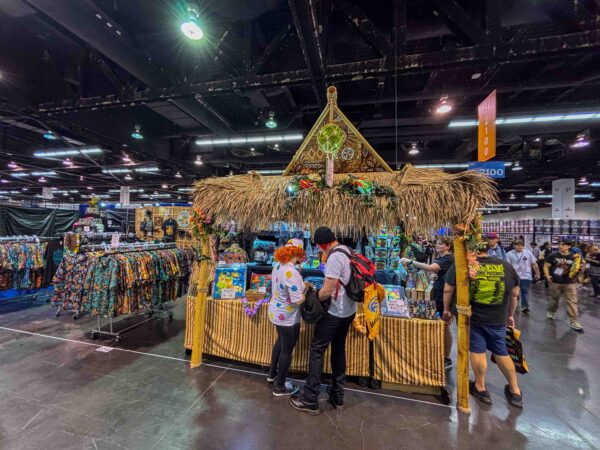
One of the most transportive moments on the floor came from Jeff Granito, the Southern California-based tiki artist and designer whose work lives at the intersection of mid-century tropical nostalgia and pop culture craft. The setup had full tiki room energy: thatch materials, tropical props, the kind of immersive atmosphere that made you feel like you’d turned a corner and stumbled into a beachside bar, not a convention hall. Half storefront, half retail space, all fun on the design. The placement mattered. Discovering a fully realized environment by turning a corner is a different experience from walking up to a booth head-on. The surprise is part of the delight. That’s experience design thinking applied to a small footprint, and it worked.
Deeper Issues Nerdcast: The Video Store That Time Forgot
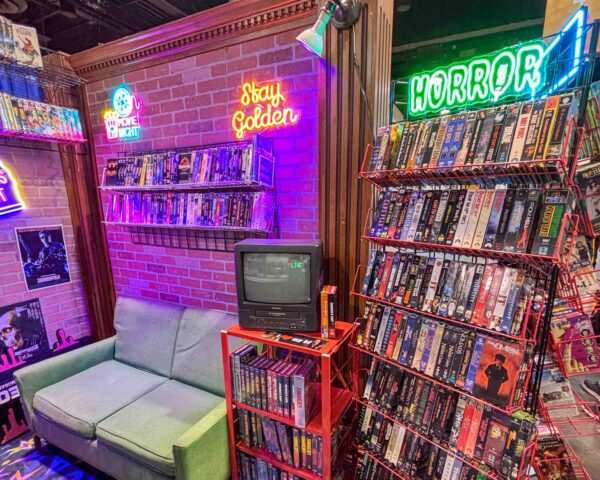
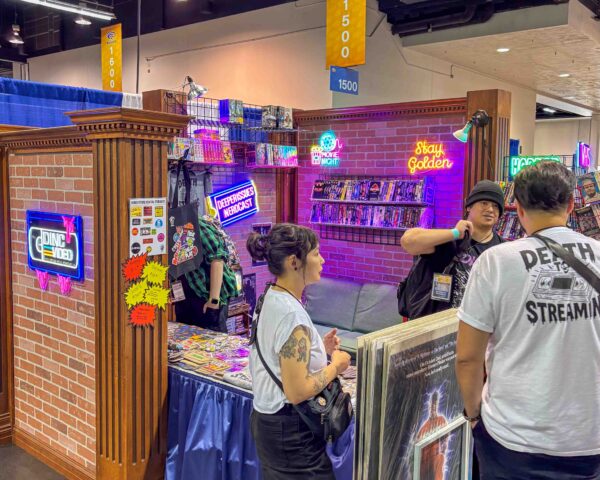
One of the most transportive moments on the floor came from Deeper Issues Nerdcast, whose booth was styled like a video rental store straight out of the late 80s. Curated shelves, a cathode-ray aesthetic, the deliberate nostalgia of a format that’s been gone long enough to feel genuinely rare. Kids today would call it a ‘Stranger Things aesthetic.’ Elder millennials would just call it Saturday night.
It worked because it was specific. Not “retro” in a vague, sepia-toned way — specific. If you grew up in that era, you recognized exactly what you were looking at, and that recognition creates an immediate emotional connection. That connection makes you want to browse. But the real masterclass wasn’t the shelves or the aesthetic. It was who they invited into the space. On Sunday, Deeper Issues Nerdcast hosted Bob Gurr — the legendary Disney Imagineer behind Disneyland icons like the Monorail, the Matterhorn Bobsleds, and the Doom Buggies — for a signing at the booth. A man who spent his career building the physical spaces where an entire generation made their earliest memories, sitting inside a booth designed to look like the other place that same generation called home on a Saturday night.
That’s not a coincidence. That’s curation. And it’s a lesson worth carrying into any experiential context: the guests you bring into your activation, the talent you put behind your table, the partners you associate with your space — all of it is brand messaging. The booth tells people who you are. The people inside it confirm it.
The Case for Full Booth Design (Even at a Small Show)
The biggest booth in terms of investment — and arguably the biggest in terms of impact — was Aphmau’s Mini-Mart: a full storefront build with an awning, facade signage, display windows, and a controlled entry queue that turned a floor space into something that felt like a retail destination.
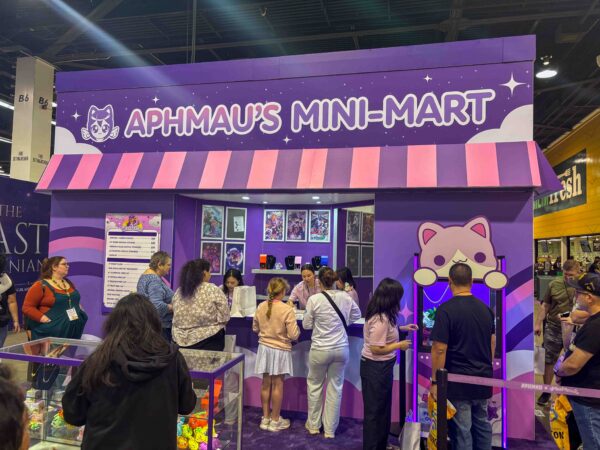
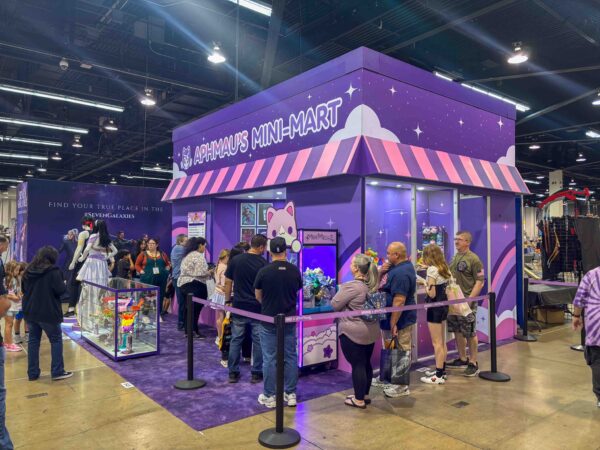
At a show like WonderCon, a build like this stands out the way a flagship store stands out on a street full of kiosks. But beyond the visual drama, there’s real strategic logic behind going full storefront:
- Controlled crowd flow: the queue manages foot traffic and creates social proof without overwhelming the booth.
- Gated inventory: keeping merchandise inside the structure means less shrink and more intentional purchasing moments.
- Window vignettes: passersby can preview products without entering, which primes interest before they ever step inside.
- Reusability: a modular build like this can travel across multiple shows, spreading the investment across an entire con season.
The Mini-Mart wasn’t just a booth. It was a brand moment — the kind of experience that ends up on people’s social feeds, earns organic impressions, and extends reach far beyond the show floor.
Send Help: When a Studio Brings the Movie to the Show Floor
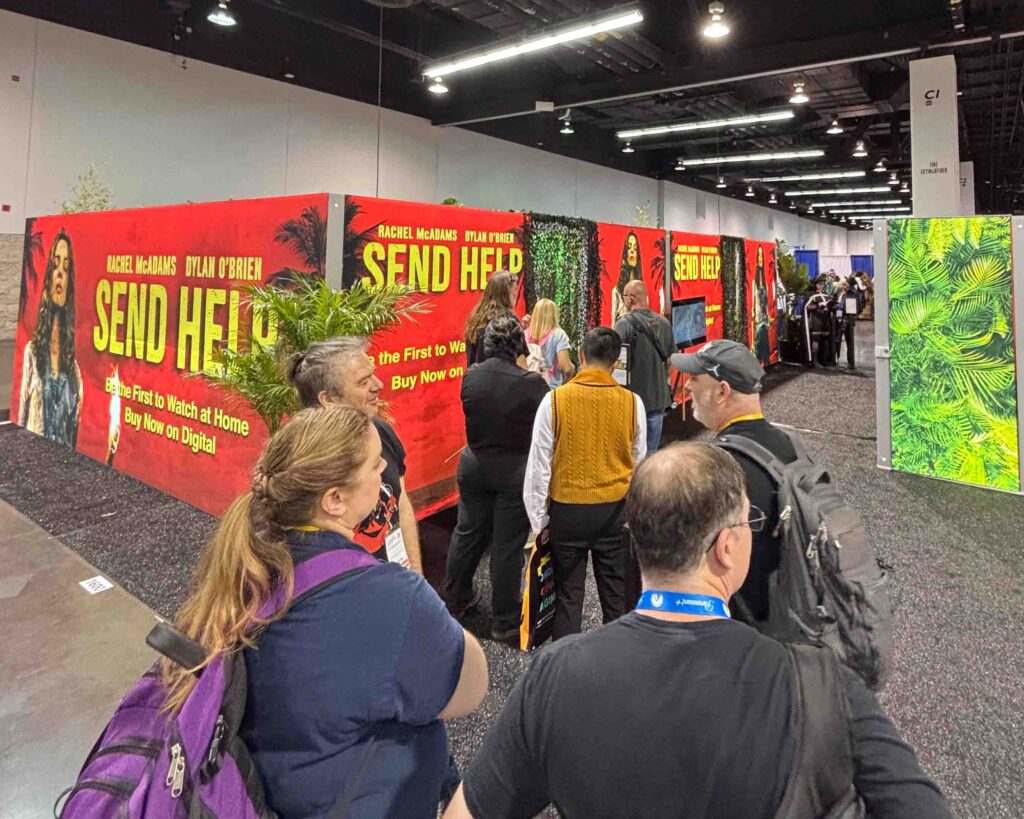
The most ambitious activation at WonderCon 2026 wasn’t from an exhibitor — it was from 20th Century Studios, promoting the digital release of Send Help, Sam Raimi’s darkly comedic survival thriller starring Rachel McAdams and Dylan O’Brien.
For WonderCon, 20th Century Studios built a fully realized escape room experience inspired by the film’s island setting. Teams of up to eight people had 15 minutes to navigate a series of interconnected puzzles inspired by the movie’s premise. Reservations helped manage crowd flow. A photo opportunity capped the experience. Staff noted that having seen the film wasn’t required, though there were minor spoilers in the clues.
This is exactly the kind of activation that made WonderCon’s studio era exciting, and it’s a good sign that those instincts aren’t entirely gone. The show has evolved away from the big theatrical premiere model of the 2000s, but an activation like this — one that actually puts attendees inside the film’s world rather than just showing them a trailer — is arguably more engaging than any panel.
What WonderCon Gets Right
WonderCon 2026 reminded us that the most engaging booths aren’t always the biggest or the most expensive. They’re the most considered. The exhibitors who show up with a concept, a point of view, and the discipline to execute it without overcomplicating it — those are the booths people stop at, photograph, and remember.
The show has found its lane. It’s not trying to be San Diego Comic-Con. It’s a show for people who love the art form, the craft, and the community — and the booths that work best are the ones that understand that same thing about themselves.
Small footprints force focus. And focus, as it turns out, is one of the most powerful tools in booth design.
That’s something we think about every time we start a new project. The question was never “how big can we go?” It’s always “how clear can we be?” Clarity of concept is what makes a 10×10 feel like a destination and a 10×20 feel like a world. It’s what makes someone stop mid-aisle, pull out their phone, and share what they’re looking at with people who aren’t even there. That organic moment — the unsolicited photo, the story post, the “you have to see this booth” text — is worth more than any media buy, and it starts with a single decision made early in the design process: knowing exactly what you want someone to feel when they walk up.
At FGPG, that’s where we start. Not with square footage or budget or build specs — with the feeling. Everything else that allows us to build that feeling is the craft of getting there. And if WonderCon 2026 proved anything, it’s that the craft is alive and well — even when the space is small.