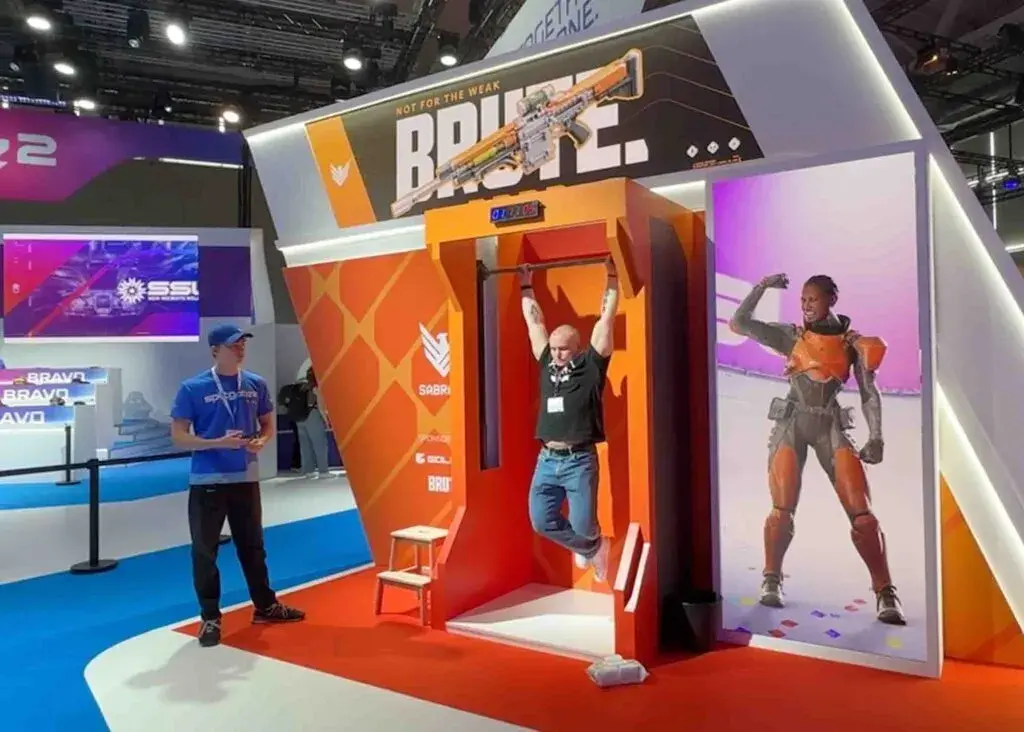
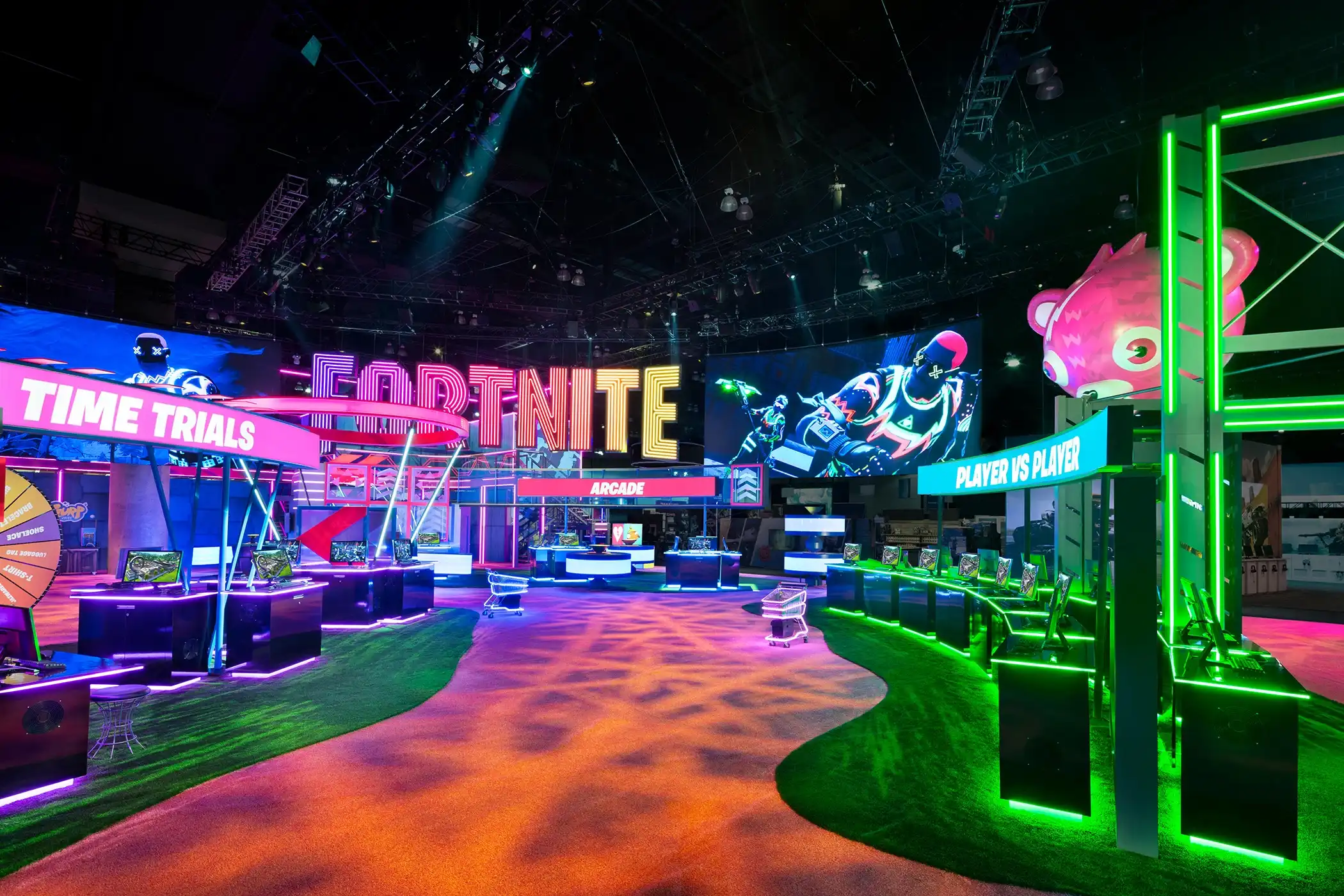
Experiential marketing campaigns are reshaping how brands connect with consumers. This guide walks you through strategy, real-world examples, planning frameworks, measurement tactics, and how to choose the right experiential marketing agency for your next activation.
Key Takeaways
Experiential marketing campaigns are live, interactive brand moments that invite genuine participation rather than passive observation. They span pop-up shops, mobile tours, augmented reality filters, in-store activations, and virtual events. In an era when consumers scroll past thousands of ads daily, these experiences cut through noise by creating memorable brand experiences that people feel, share, and remember.
Brands like Coca-Cola, the creators behind M&M's flavor rooms, and Warner Bros Pictures with the Barbie movie selfie generator have proven that immersive experience design drives attention, first-party data, and sales. In fact, 91% of consumers are more likely to buy after participating in brand events.
What Is An Experiential Marketing Campaign?
Experiential marketing campaigns are interactive, real-world or hybrid experiences that invite consumers to step inside a brand's story. Think of a VR soccer skills challenge at a transit hub, an AR try-on mirror for cosmetics, or a multi-sensory tasting room for a food brand. These marketing campaigns can include physical events, digital experiences, or a blend of both.
A few related terms show up across the industry. Experiential marketing is also known as engagement marketing, which emphasizes two-way interaction. Brand experience refers to any perceived touchpoint with a brand. Brand activation describes short-term, action-focused moments designed to spark participation. Traditional marketing focuses on one-way communication to broad audiences, while experiential marketing creates two-way interactions with customers.
Key elements of experiential marketing include immersion, two-way interaction, and emotional connection. This stands in contrast to event marketing, which often centers on attendance, stage content, and logistics.
| Dimension | Experiential Marketing | Traditional Event Marketing |
|---|---|---|
| Primary goal | Immersion and emotional connection | Attendance and information delivery |
| Interaction level | High: multi-sensory, participatory | Moderate: audience watches, listens |
| Data capture | Lead forms, QR scans, opt-ins, sentiment | Registration lists, satisfaction surveys |
| Format flexibility | Pop ups, mobile tours, AR/VR, in store | Conferences, keynotes, seminars |
| Success KPIs | Dwell time, social sharing, trial rate | Headcount, session ratings |
| Technology use | AR, VR, interactive installations, AI | AV, staging, presentation slides |
Experiential campaigns can happen in person at festivals and retail spaces, through hybrid formats blending live and digital, or as fully digital activations like the Barbie movie selfie generator that let users participate from anywhere in the world.
Why Experiential Marketing Matters In 2026
The average person sees thousands of brand messages every day. Click-through rates on display ads continue to decline, organic reach on social platforms keeps shrinking, and traditional advertising methods struggle to hold attention. Experiential marketing can differentiate brands in crowded markets by providing unique experiences that no banner ad can replicate.
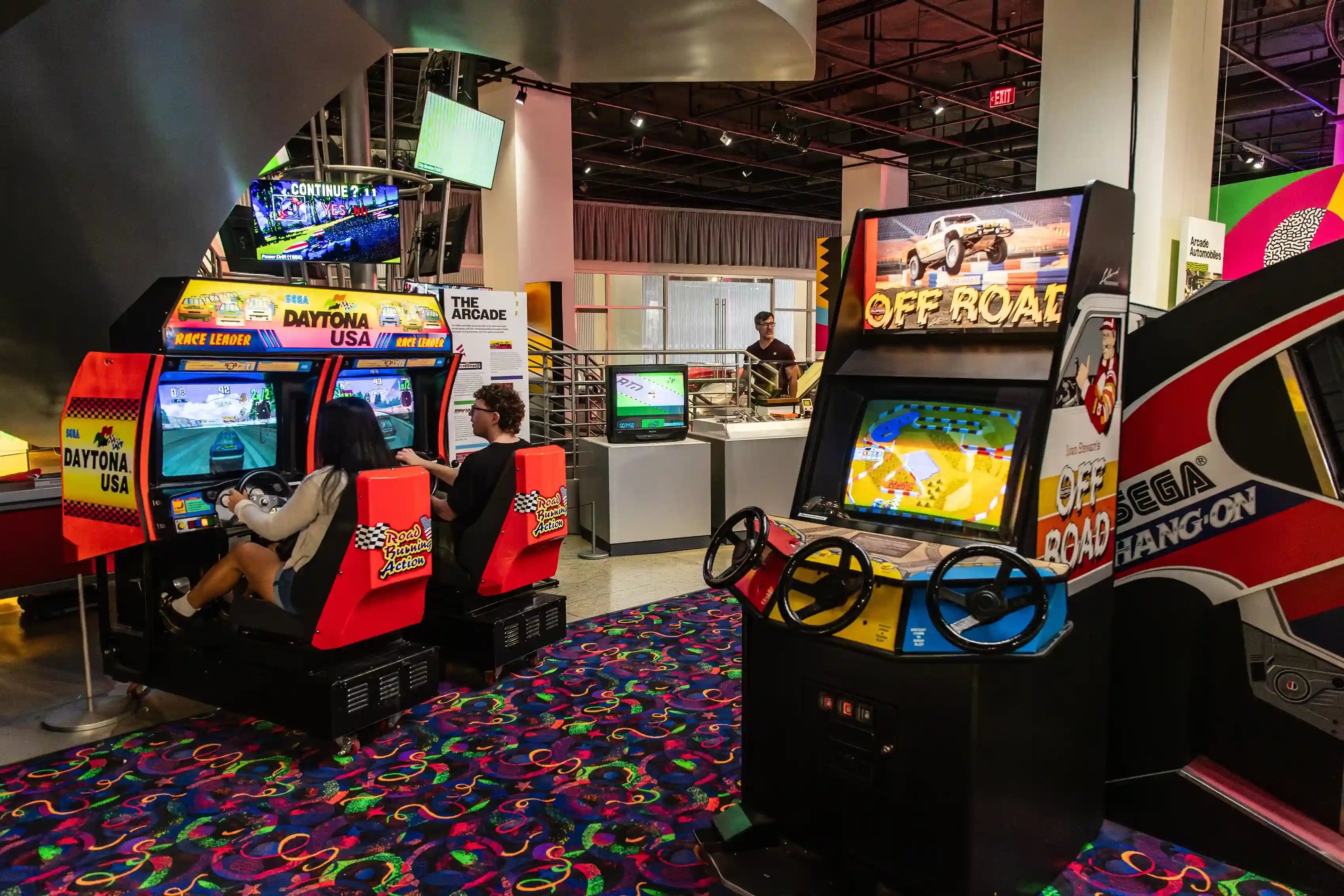
The data backs this up. 91% of consumers are more likely to buy after participating in experiences. Experiential campaigns can lead to greater brand awareness through media coverage and word-of-mouth, and they can go viral, enhancing brand reach and recognition. When working with The Petersen Automotive Museum on “Totally Awesome!”, we focused in on the nostalgia by including a retro arcade filled with classic racing games, leaning fully into the psyche of not only the cars we grew up with in the 80’s and 90’s, but also the games that surrounded the culture, which resulted in 300,000 guests not only viewing the exhibit, but playing in it.
The psychological angle matters too. Tactile, multi-sensory, and immersive experiences (taste, touch, sound, motion) create stronger memory encoding than static content. When consumers engage on a deeper level through personal experiences, they form lasting emotional connections with brands. Experiential marketing drives high brand affinity through memorable interaction and aids in community building by transforming regular buyers into active brand fans. Such campaigns foster long-term customer relationships by creating positive associations.
Participants in experiential marketing campaigns naturally share their experiences on social media, turning each attendee into a content creator. This social sharing turns a single event into a ripple of earned impressions that reach potential customers far beyond the physical footprint, helping increase brand awareness and build brand loyalty among loyal customers.
Core Elements Of A High-Impact Experiential Marketing Strategy
Not every flashy activation qualifies as a smart marketing strategy. The best experiential marketing strategies are built on repeatable frameworks, not just spectacle. Here is the blueprint your marketing team can follow for any experiential campaign regardless of industry or budget.
Core strategic pillars include:
- Clear objectives tied to business outcomes (trial, awareness, lead capture)
- A tightly defined target audience informed by behavioral and demographic insights
- An experiential "big idea" that is simple, participatory, and visually compelling
- Channel integration connecting live moments to social media, email, and paid amplification
- Operational and logistics planning (permitting, fabrication, staffing, shipping)
- Measurement aligned to KPIs from the start
| Strategic Pillar | Typical Decisions and Outputs |
|---|---|
| Objective: Drive trial | Tastings, sampling tours, product demos |
| Objective: Reframe brand perception | Immersive storytelling exhibits, curated press events |
| Objective: Generate content | Photo ops, social media content walls, UGC prompts |
| Objective: Capture leads | QR-gated activations, RFID wristbands, email sign-ups |
| Objective: Build community | Recurring series events, fan meetups, loyalty activations |
FG|PG applies these pillars to every engagement. From an initial strategy workshop through post-event debrief, their integrated model of creative, fabrication, and production under one roof ensures that the big idea stays on brand and operationally feasible from day one.
Experiential Marketing Formats: From In Store To AR and VR
Experiential campaigns can happen in retail stores, public plazas, music festivals, trade show floors, museums, and purely digital environments using augmented reality or virtual reality. The format you choose should match your objectives, audience context, and budget.
Common formats include pop-up shops that create urgency and exclusivity for brands, mobile tours that bring branded environments to multiple cities, live brand activations at festivals and sporting events, in-store experiences like guided demos and interactive displays, museum-like installations that tell a product or brand story people remember, digital-only AR and VR campaigns, and blended "phygital" activations that merge in-person experiences with digital layers.
| Format | Cost Level | Lead Time | Reach | Engagement Depth |
|---|---|---|---|---|
| Pop up shop | Mid to high | 8-14 weeks | Local to regional | High: tactile, immersive pop up |
| Mobile tour | High | 12-20 weeks | Multi-city, national | High: interactive experience at each stop |
| Festival activation | Mid | 8-12 weeks | Event attendees + social | High: in person with photo ops |
| Digital AR campaign | Low to mid | 6-10 weeks | Global, unlimited | Moderate: accessible, shareable |
Interactive campaigns such as the Coca-Cola 2018 World Cup AR activation and the Barbie movie selfie generator show how augmented reality extends brand experiences well beyond physical footprints. Interactive games embedded in activations add another layer of dwell time. Virtual reality takes that further — when the goal is to make an audience feel something that can't be physically recreated, VR closes the gap.
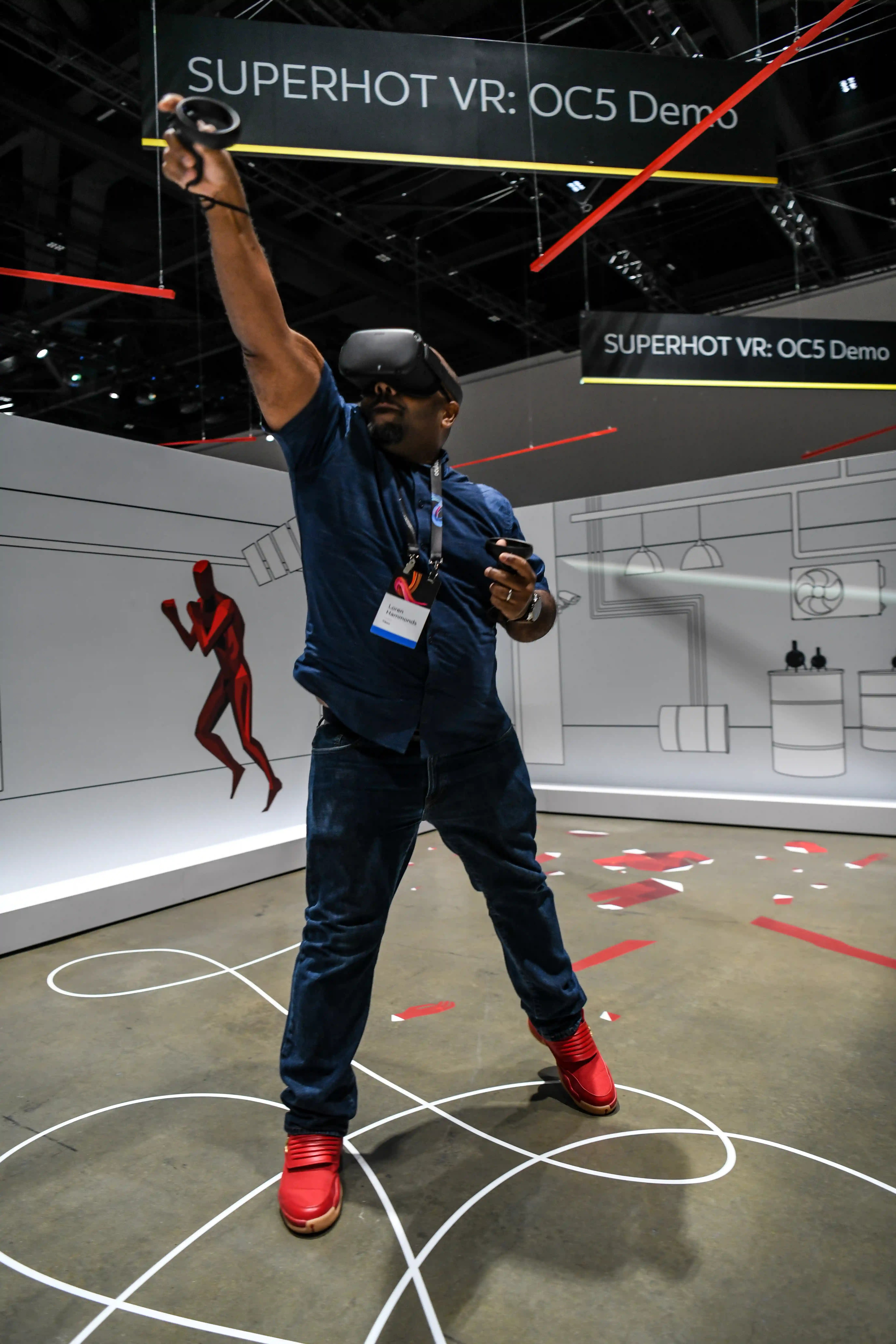
For Oculus OC5, FG|PG produced a developer conference at the San Jose Convention Center built entirely around hands-on VR experience — over 100 demos, room-scale and arena-scale activations for titles like SUPERHOT VR and Dead and Buried Arena, and environments designed to show developers exactly how Quest performed in real living rooms and competitive arenas. The only way to make the case for VR's potential was to put it in people's hands. The event did exactly that.
FG|PG designs different formats to match objectives. Our portfolio includes large-scale trade show exhibits for B2B lead generation, intimate press events and influencer previews for consumer buzz, and everything in between. Across 50+ projects in our work portfolio, we have executed pop-ups, stunts, museum exhibitions, and touring activations.
Iconic Experiential Marketing Campaign Examples
Here is a curated look at some of the best experiential campaigns that experiential marketers reference when planning their own initiatives. Each represents a successful experiential marketing campaign built on participation, shareability, and clear brand alignment.
M&M's invited consumers into multi-sensory flavor rooms in New York City, where each room represented a different flavor through scent, color, texture, and sound. The format made it simple for visitors to engage with the product in a way that traditional advertising could never replicate. Similarly, Lean Cuisine created its #WeighThis installation, inviting consumers to redefine how they measure personal success, connects the brand to self-worth rather than calorie counting.
Warner Bros Pictures and the Barbie movie selfie generator engaged users before the film's release, letting people upload selfies and see themselves transformed into Barbie-style movie posters. The tool generated over 13 million social shares globally. Meanwhile, Coca-Cola built an AR soccer skills challenge in Zurich's main station during the 2018 FIFA World Cup, giving travelers an engaging experience that tied directly into global football fandom.
Beyond these, WestJet's Christmas Miracle video received 12 million views in 3 days, proving that experiential marketing can go viral and catch people's attention at massive scale. The Lego and Formula 1 experience used 400,000 Lego bricks to build a life-size F1 car, delivering a world record-level spectacle. Verizon's Super Bowl FanFest engaged fans in 30 cities, showing how a single brand activation idea can scale nationally.
| Brand | Core Idea | Primary Format | Main Outcome |
|---|---|---|---|
| M&M's | Multi-sensory flavor rooms | Immersive pop up installation | Deep product engagement, massive foot traffic |
| Barbie (Warner Bros Pictures) | AI-powered selfie generator | Digital tool + social sharing | 13M+ social shares, pre-release buzz |
| Coca-Cola | AR soccer skills challenge | AR installation at transit hub | Earned media, global football tie-in |
| WestJet | Christmas Miracle surprise | Live event + viral video | 12M video views in 3 days |
| Lego x Formula 1 | Life-size F1 car from 400K bricks | Physical spectacle, world record | Massive earned media, brand storytelling |
Common success factors across these examples: a simple participation mechanic, an instantly understandable visual hook, strong social media integration, and a clear call to action (purchase, share, sign up, visit cinema, or promote the brand).
FG|PG's Approach To Experiential Brand Activations
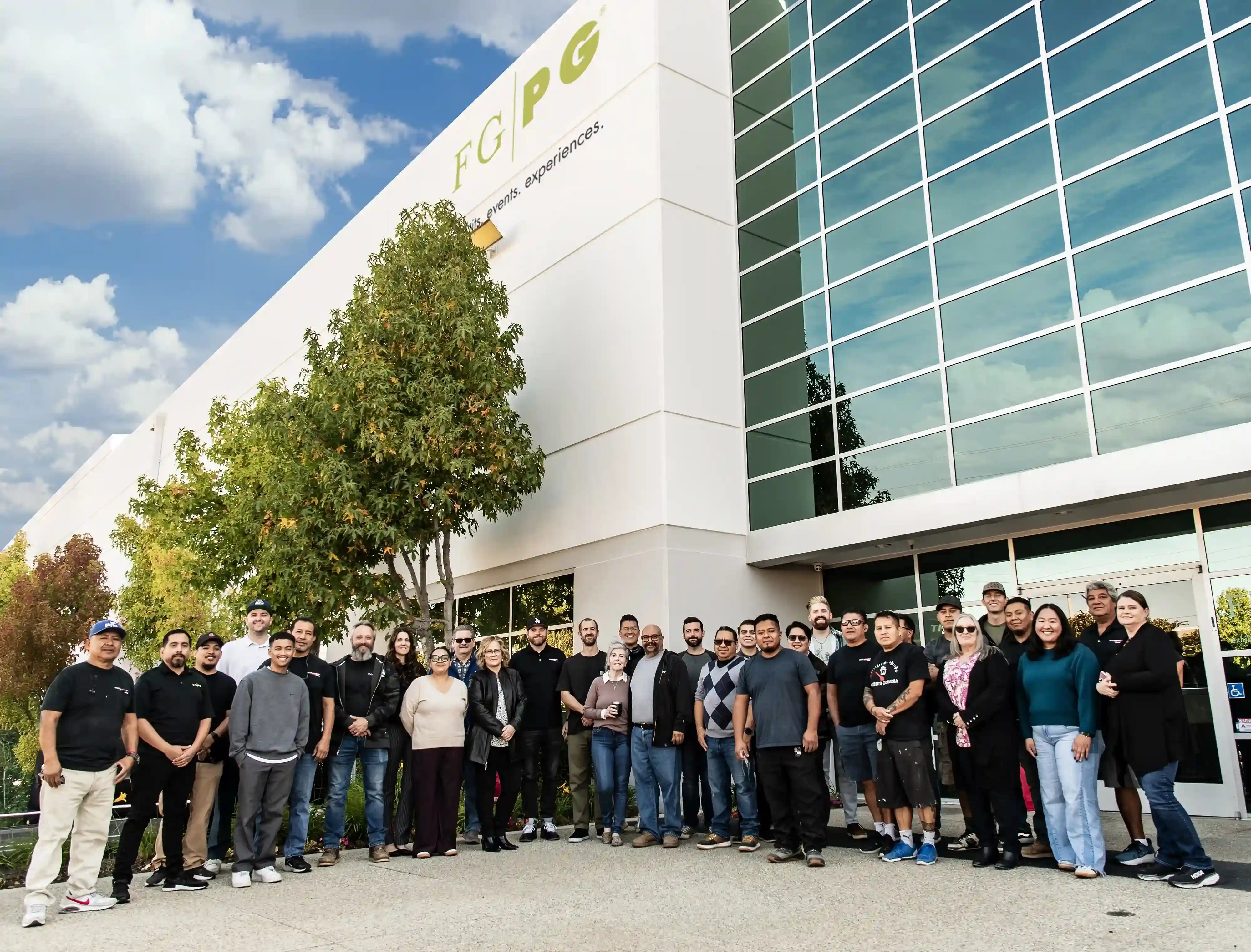
FG|PG is a woman-owned, award-winning, WBENC-certified agency with over 25 years of experience creating engaging experiential activations. Our specialties include live experiences, trade show exhibits, retail pop ups, press events, stunts, interactive digital and virtual experiences, and museum exhibitions. With an 81,000 sq. ft. in house facility in Southern California, strategy, creative, 3D design, fabrication, engineering, production, and logistics all happen under one roof.
Our end-to-end process covers:
- Discovery and strategy workshop
- Creative concepting and narrative development
- 3D design and visualization
- Technical design and engineering
- Custom fabrication of branded environments
- On-site production and staffing coordination, including brand ambassadors
- Post-event analytics and reporting
We integrate experiential marketing strategies with brand goals so that every activation supports sales, positioning, or product education, not just impressions. Our portfolio shows this range clearly.
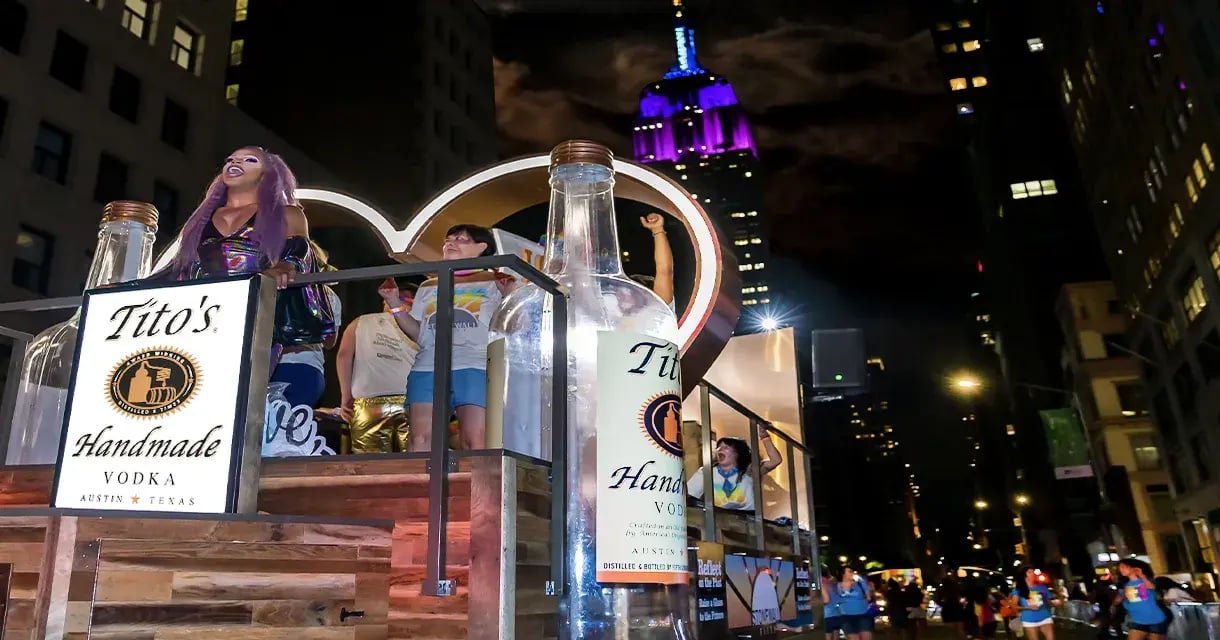
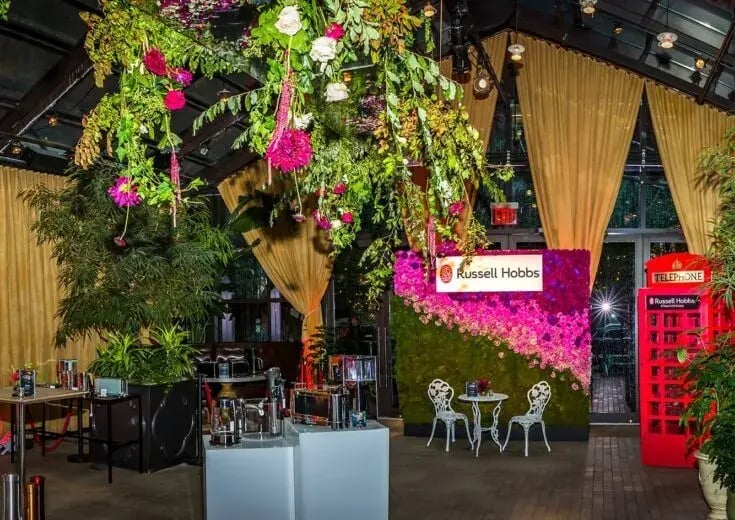
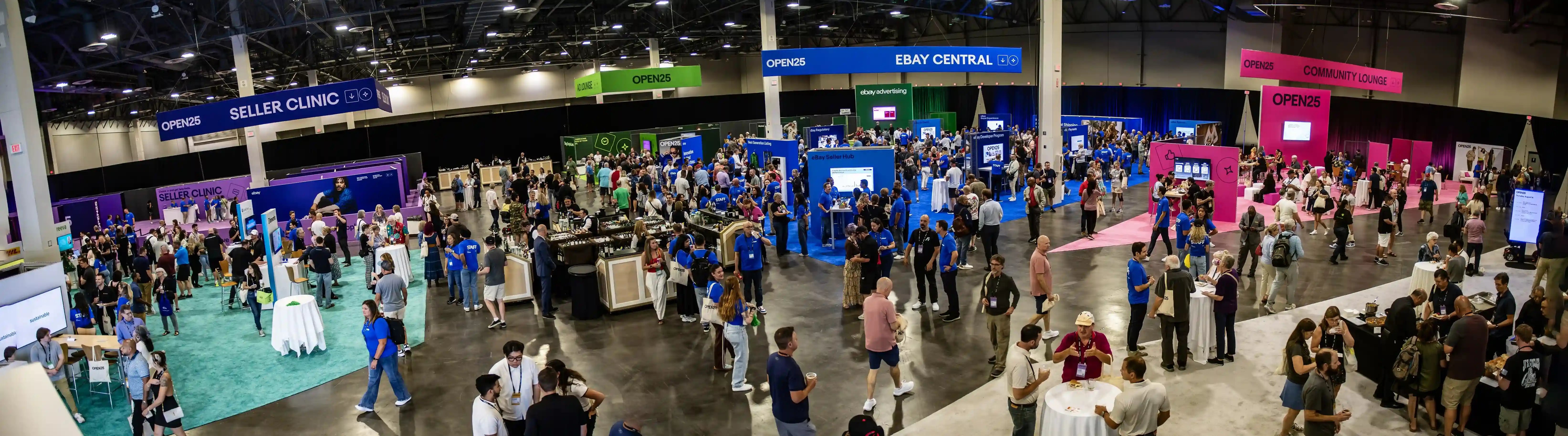
We built Tito's Handmade Vodka's traveling float program for Pride events, designed to promote the brand's "LOVE IS LOVE" message across multiple cities, orchestrated Russell Hobbs' US debut event during New York Fashion Week, delivering a high-touch press experience, and created eBay's Market-Verse Experience at New York Comic Con, showcasing our ability to create powerful stories people connect with in fan-culture settings.
Our approach stands apart from typical agencies through operational reliability, transparent budgeting, experience navigating complex trade show regulations and union labor, and the ability to deliver consistent quality across multiple markets. When every detail needs to land at the right moment, having a single team handling the following duties from creative through build through teardown eliminates the risk of miscommunication between vendors.
Designing An Experiential Campaign: From Brief To Immersive Experience
Here is how a marketer can move from initial concept to a fully realized experiential campaign, step by step.
Start by clarifying business objectives. Are you driving product trials, generating leads, creating social media content, or repositioning brand perception? Then define your target audience and the context in which they will encounter the experience. Write a detailed creative and operations brief that maps the attendee journey from arrival to exit.
Every strong experience follows a simple arc: entry hook that draws people in, core interaction where the brand story comes to life, content capture moment (photo ops, video, social prompt), data capture (email, QR code, SMS opt-in), and exit with a clear next step such as a discount code or product sample.
| Process Step | Key Deliverable |
|---|---|
| Objective clarification | Business goals, success metrics |
| Audience definition | Personas, behavioral insights |
| Creative brief | Theme, narrative, visual direction |
| Experience design | Floorplan, interaction storyboard, tech spec |
| Operations planning | Venue, permits, staffing plan, shipping |
| Measurement setup | KPI tracking tools, data capture flows |
FG|PG collaborates with brand stakeholders at each step, including legal, procurement, and regional field teams. This makes sense for keeping creative work feasible and on budget. Their integrated model means the design team creating the concept is the same team engineering and fabricating it, which eliminates costly misalignments and ensures the final result stays on brand.
Technology In Experiential Marketing: AR, VR, And Beyond
Technology has expanded what experiential marketers can build. From gesture-controlled installations to mobile AR layers overlaying city streets, the toolkit grows every year.
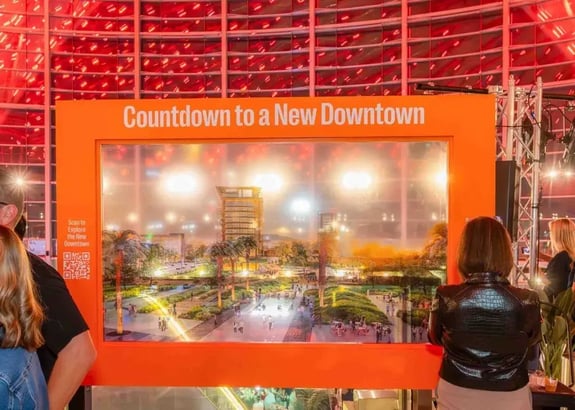
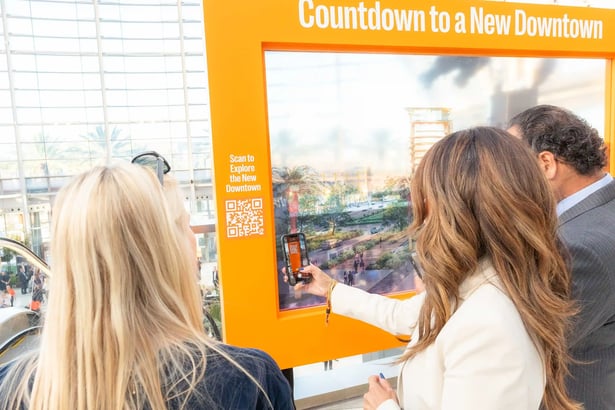
Augmented reality lets people participate from home or transit hubs. The Barbie movie selfie generator used AI-driven background removal to place users into movie poster graphics. But AR's most powerful application isn't novelty — it's bridging the gap between a physical space and a world that doesn't exist yet. At the OCVIBE Launch at The ARTIC, FGPG deployed a transparent display board with an integrated QR code that let guests scan and instantly see the future cityscape transformation planned for the surrounding development — standing inside the existing transit hub while previewing what Orange County's new center of gravity would look like. The physical environment and the digital vision existed in the same moment, making an abstract promise tangible to everyone in the room. That's the real utility of AR in experiential marketing: inserting consumers further into the worlds brands are building, not just the ones that already exist.
Virtual reality serves as a tool for transportive storytelling, putting attendees inside product worlds, architectural designs, or entertainment franchises. It is particularly effective when the brand wants consumers to "feel" a place or scenario that cannot be physically recreated.
Other interactive tech common in experiential marketing includes RFID and NFC wristbands for tracking, motion tracking, projection mapping, large-format touch screens, interactive games, and generative media walls. We evaluate technology choices by starting from user experience and reliability, then moving to feasibility, vendor support, and scalable deployment across multiple events.
Integrating Experiential Marketing With Digital, Social, And CRM
The most effective experiential campaigns function as part of a wider ecosystem, not a one-off event. Experiential marketing can boost brand awareness through social sharing and viral engagement when digital integration is baked in from the start.
Before the event, teams should deploy teaser content, countdowns, RSVP pages, and partnerships with influencers or local communities to draw attention and prime attendance.
On-site, integration should include:
- A branded hashtag for unified social media content capture
- Live social content capture stations
- Mobile-friendly microsites
- QR codes linking to product pages or sign-up forms
Post-event follow-up is where many teams drop the ball. Set up email journeys, retargeting ads based on attendance data, personalized offers, and repurpose content captured at the activation in future campaigns. Experiential marketing can boost brand awareness through viral engagement long after teardown.
We plan for integrated capture and follow-up from the outset, collaborating with clients' CRM, email, and paid media teams. This ensures the longer-term value of each experiential marketing campaign extends well beyond the event itself.
Measuring Experiential Marketing ROI
Experiential marketing campaigns offer immediate, measurable feedback through data collection. Leadership teams expect clear reporting, and the tools exist to deliver it.
Key quantitative metrics include:
- Total attendees and dwell time
- Engagement rate with core interaction
- Leads captured (email, SMS, QR)
- Samples or demos distributed
- Direct sales lift in nearby stores
- Social metrics (branded hashtag usage, content shares, impressions)
Qualitative measures matter too: sentiment analysis, attendee feedback, partner feedback, and post-event brand perception shifts. Together, these inform campaign performance and justify future investment.
| Campaign Goal | Recommended KPIs | Measurement Tools |
|---|---|---|
| Brand awareness | Social reach, press mentions, video views | Social listening, media monitoring |
| Product trial | Samples distributed, demo completions | On-site counters, POS data |
| Community building | Repeat attendance, UGC volume, opt-ins | CRM tracking, social analytics |
| Content creation | Assets captured, content shares | Content management platform |
| Lead generation | Leads captured, follow-up conversion | QR tracking, CRM pipeline |
Budgeting And Operational Realities Of Experiential Campaigns
Cost is driven less by "type of activation" and more by choices around scale, fabrication complexity, staffing, technology, and tour length. Understanding these drivers helps your team allocate budget effectively.
Main cost drivers include:
- Square footage and venue rental
- Number of cities on a tour
- Level of custom build versus rental infrastructure
- Interactive tech stack (AR, VR, RFID, projection)
- Permitting, insurance, and compliance
- Logistics (shipping, storage, maintenance)
Start with your must-have outcomes, then align hero moments to budget bands. Avoid spreading funds too thin across too many ideas. A single strong, photogenic installation will outperform five half-built elements every time.
| Budget Tier | Characteristics | Typical Format |
|---|---|---|
| Entry-level | Single city, 1-3 days, simple build, minimal tech | Local pop up, guerrilla activation |
| Mid-range | 2-5 cities, custom fabrication, interactive tech | Regional tour, trade show exhibit |
| Flagship | National or global, full custom build, advanced tech | Multi-city mobile tour, large-scale immersive pop up |
We help clients phase rollouts, reuse modular components, and negotiate vendor rates so that experiential marketing budgets deliver maximum on-site impact and measurable returns. Our in-house fabrication capabilities eliminate markup from third-party build vendors, and their modular design philosophy means components from one event can be adapted for the next.
How To Choose The Right Experiential Marketing Agency (And Why FG|PG Stands Out)
The right partner can be the difference between a seamless, high-ROI activation and a stressful on-site scramble. Here are the criteria your marketing team should evaluate:
- Strategic thinking and creative originality
- In house fabrication and technical capabilities
- Staffing, field management, and brand ambassadors coordination
- Safety, compliance, and permitting experience
- Transparent project management and budgeting
Specific reasons to choose FG|PG as the right partner:
- Over 25 years and 50+ projects spanning live events, trade shows, museum-style exhibits, press events, and stunts
- Woman-owned and WBENC-certified, supporting supplier diversity goals
- Proven ability to integrate physical builds with digital and virtual experiences
- A track record of creating life-changing brand moments for clients including Panasonic, Marvel, Cars.com, and eBay
We’re more than a vendor. We’re a strategic partner who helps you create powerful, memorable experiences from first conversation through final analytics. If your next campaign needs to catch people's attention and hold it, explore our full portfolio and start a conversation.
Common Experiential Marketing Mistakes To Avoid
Even the most ambitious ideas can fail without realistic planning. Here are the pitfalls to watch for:
- Unclear objectives that leave the team unable to measure success
- Overcomplicated interactions requiring too much explanation, when a unique experience should be intuitive
- Ignoring accessibility needs for attendees with disabilities
- Underestimating staffing and training requirements
- Forgetting post-event follow-up plans, wasting the data and content you worked hard to capture
- Poor permitting, safety oversights, or technology that fails on site due to insufficient testing
Risk-related mistakes are among the costliest. A tech failure at a high-profile activation damages brand perception and wastes budget. We mitigate these risks through structured pre-production processes, contingency planning, rehearsals, and experienced on-site leadership. Their team has navigated complex trade show regulations, union labor requirements, and multi-venue logistics for decades.
Even the most creative experiential campaign ideas can be executed smoothly when they are grounded in realistic planning and operational discipline. That is what separates a memorable life-changing brand moment from an expensive headache.
Below are additional questions marketers frequently ask that go beyond what is covered in the main body of this article.
The FG|PG Team
FG|PG was founded nearly 21 years ago. Today we’re one of the largest woman-owned, WBENC Certified, live, hybrid and virtual experiential agencies in the US. That trajectory isn’t accidental. It’s the result of a commitment to continually evolve, to never stop learning, and to always listen to our clients’ needs.

.svg)
.svg)

.svg)
.webp)