
How Panasonic Brought a Human-Centric Exhibit to Two Major Trade Shows Back-to-Back
Client: Panasonic | Shows: AHR Expo (Las Vegas Convention Center) + IBS (Orange County Convention Center)
Two shows. Two cities. Two distinct audiences. One coherent brand.
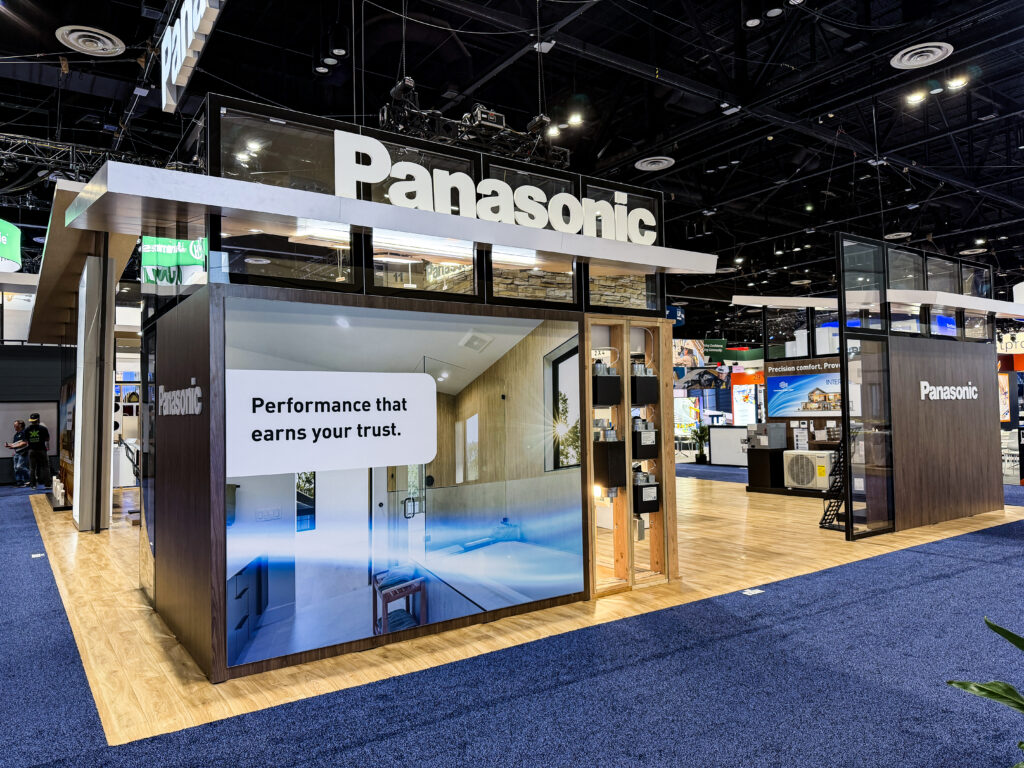
Back-to-back major trade shows are a test of more than logistics. They’re a test of whether a brand presence is actually built to work, or just built to look good in a single context.
AHR Expo at the Las Vegas Convention Center draws engineers, project managers, and technical decision-makers whose conversations center on system performance, compliance specifications, and energy efficiency data. IBS at the Orange County Convention Center brings builders, contractors, architects, designers, and real estate developers who are evaluating product ecosystems through the lens of sustainability, smart home integration, and long-term build performance.
These are not the same audience. They don’t ask the same questions, respond to the same language, or make decisions on the same timeline. Panasonic needed a single exhibit system that could serve both without the seams showing, and without rebuilding from scratch between shows.
That’s a design problem before it’s a production problem. FGPG solved it as one.
The exhibit started at FGPG headquarters, not on the show floor.
The most consequential work on this project happened before either show opened. In early November, Panasonic engineers and FGPG technicians met at FGPG’s Southern California headquarters for a dedicated prewiring session — working through every hardware integration and digital touchscreen before a single component shipped to Las Vegas.
That coordination step isn’t standard practice in trade show production. Most projects find their technical problems at installation, where union labor costs are running, deadlines are compressing, and the margin for error is zero. The decision to resolve integration challenges onsite with both teams in the room moved the risk earlier in the timeline where it could be absorbed without consequence on show site.
The best on-site installations are the ones where the surprises were already solved before the first crate opened.
By the time the exhibit shipped to the Las Vegas Convention Center, every touchscreen, every digital display, and every product integration had been tested and confirmed. The install team was executing a plan, not discovering one.
A “sense of place” is a strategic decision, not an aesthetic one.
The ask was specific: a modern, clean, welcoming environment that functioned as a true “sense of place” rather than a product display. Panasonic’s brand ethos centers on human-centric design: technology that serves people, not the other way around. The exhibit had to communicate that philosophy before a visitor read a single panel or spoke to a single staff member.
That meant making design decisions that most trade show booths avoid. Light Oak vinyl flooring — Earthscapes, installed with prime urethane padding — gave the space a warmth and quality underfoot that registered immediately. Custom ceiling light fixtures and a chandelier in the storage room brought the same attention to materiality to parts of the booth that most exhibitors treat as invisible. The result was an environment that felt considered at every turn, which is exactly how Panasonic’s products are designed to feel.
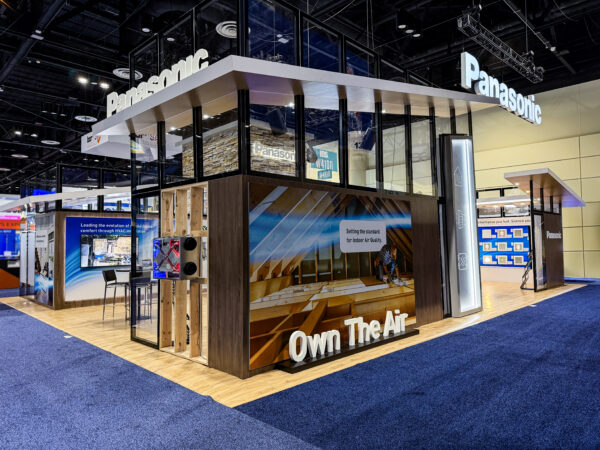
The vertical presence reinforced the brand at distance. The tower and storage room were built to 16 feet at AHR and 18 feet at IBS, with prominent branding on the face. Overhead ID signs were rigged to be visible well before a visitor was close enough to read product specifications. You found Panasonic on the floor before you arrived at it.
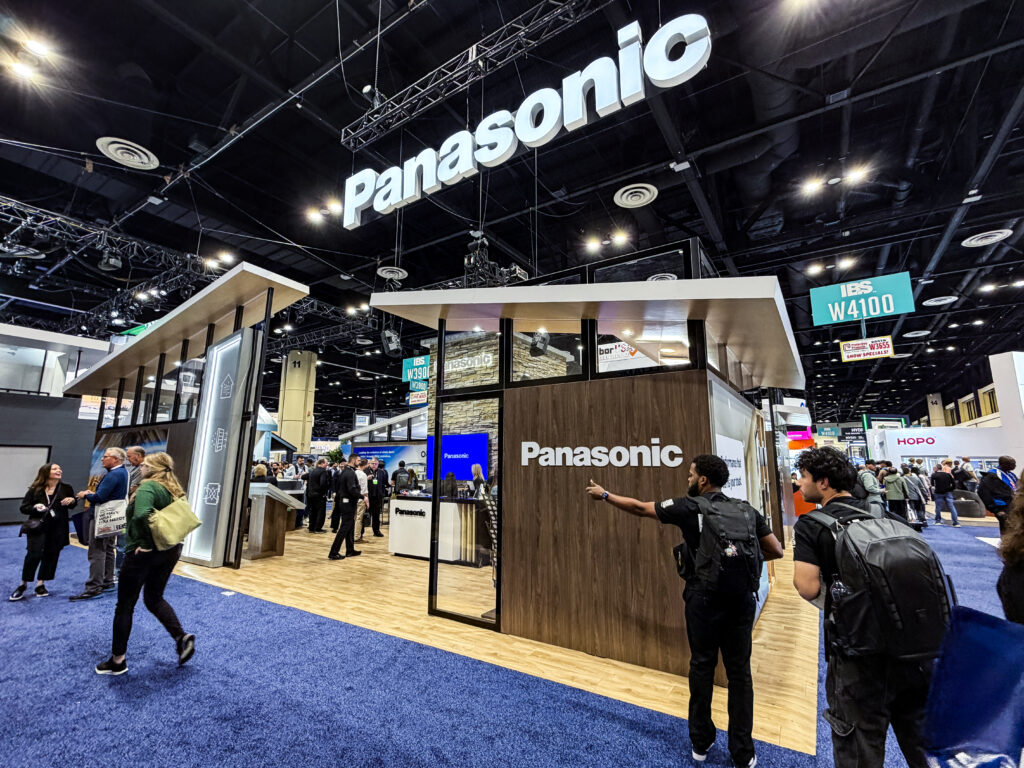
Every zone was designed around a decision, not a product category.
The layout managed two audience types simultaneously.
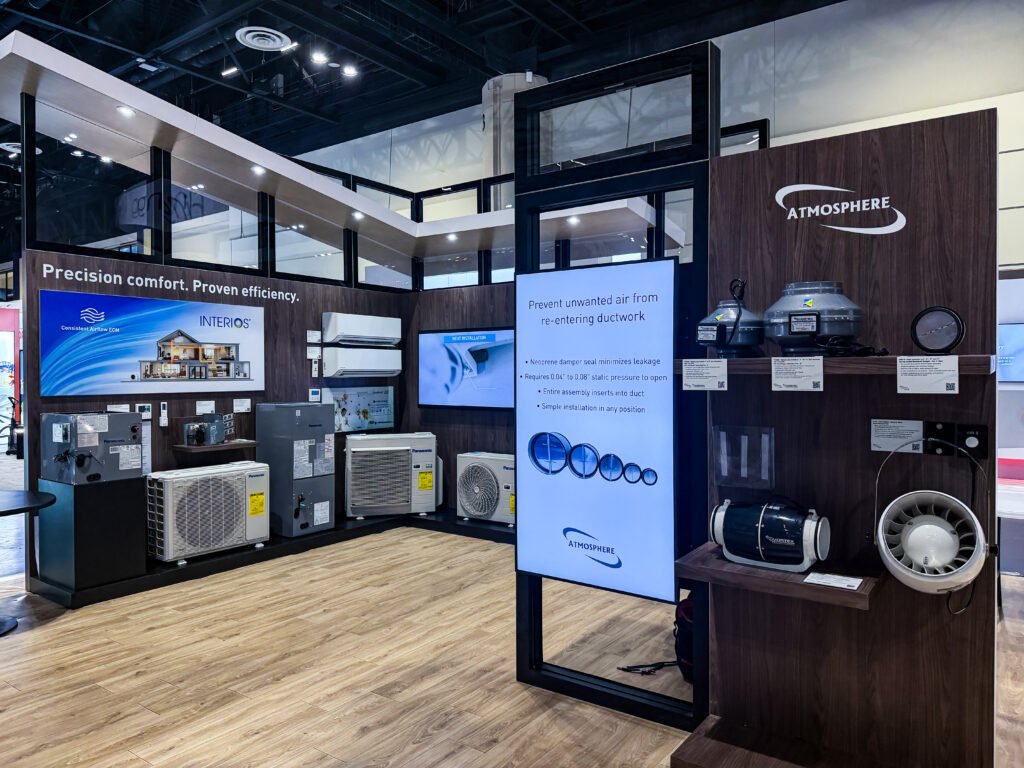
The exhibit footprint was organized into distinct zones. ERV, Ventilation Fan, HVAC, Atmosphere, OASYS, and a Seminar Area with a dedicated micro stage were each designed to move a specific type of visitor toward a specific kind of conversation. Engineers navigating a compliance decision and architects evaluating a product ecosystem for a development project needed different experiences within the same footprint. The zone structure made that possible without fragmenting the visual coherence of the overall booth.
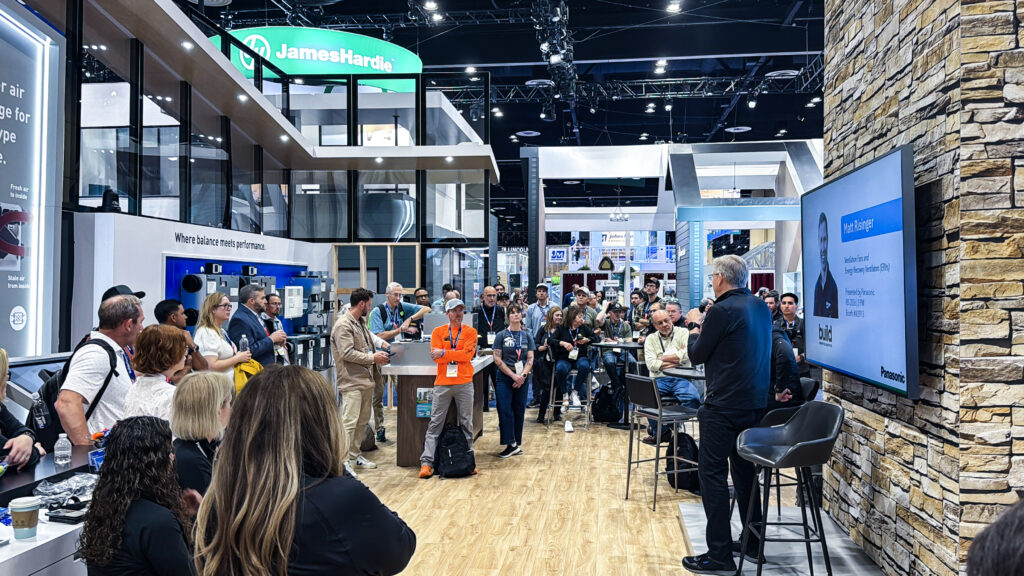
The OASYS Zone and Atmosphere Zone anchored the immersive experience.
Both zones were designed to do more than display products. The OASYS Zone utilized interactive content, giving visitors a self-directed path through Panasonic’s ecosystem at their own pace. The Atmosphere Zone created an environmental context for the technology, making it legible to a builder or designer who isn’t evaluating BTU ratings, but is deciding whether a product line fits the kind of spaces they’re building. Digitized content delivered through integrated touchscreens and TVs throughout the booth gave every zone the flexibility to communicate differently to different visitors without requiring staff to carry the full weight of that translation.
The micro stage brought business conversations on-site.
A dedicated seminar area and micro stage gave Panasonic the infrastructure for structured presentations and technical briefings within the footprint itself. For a brand whose target audience at AHR includes engineers and project managers making compliance-driven decisions, the ability to host a focused session without walking visitors off the show floor is a material business advantage. Education delivered at the booth shortens the path from introduction to negotiation.
The private conference room closed the distance between interest and commitment.
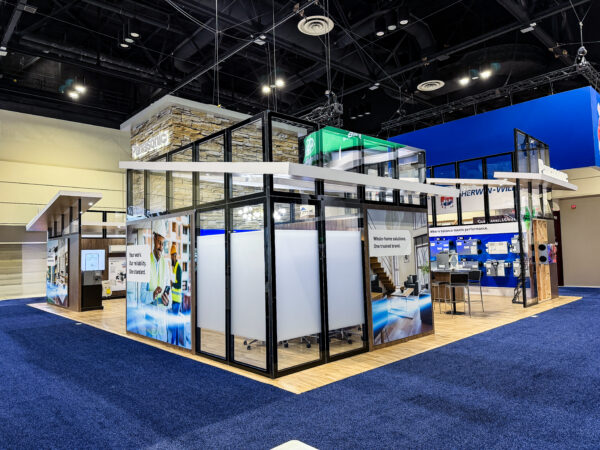
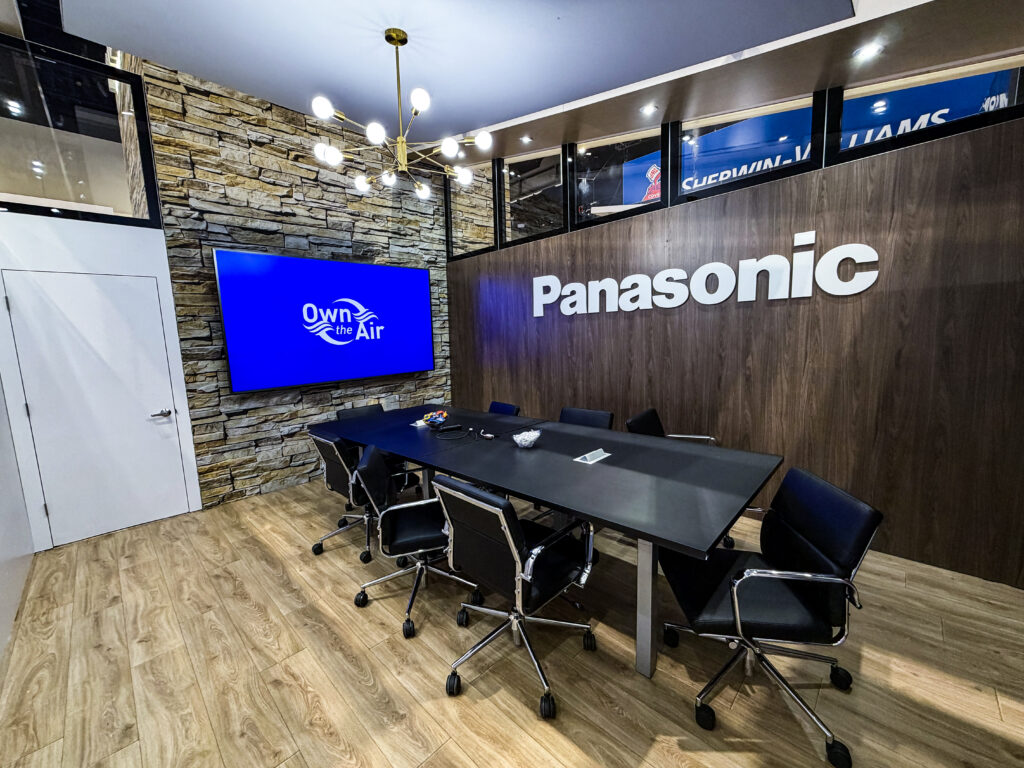
At IBS, a large conference room was integrated directly into the 40’x50′ footprint, positioned adjacent to the HVAC display and the education session area. The room was fully enclosed with a conference window that maintained visibility into the booth without sacrificing the privacy a substantive business negotiation requires. Air conditioning kept the environment comfortable regardless of what was happening on the show floor outside it.
With seating for 6+ people, dedicated ceiling lighting, and a perimeter location within the booth, it gave the room the character of a genuine meeting space rather than a curtained corner. For builders, architects, and developers evaluating Panasonic’s product ecosystem at IBS, decisions that involve procurement commitments, project timelines, and long-term partnership terms, having a private room to close that conversation on-site compressed the sales cycle in a way no product display could accomplish on its own.
The meeting room is the part of a trade show booth that most visitors never see. That’s the point. The conversations that happen inside it are the ones that matter most.
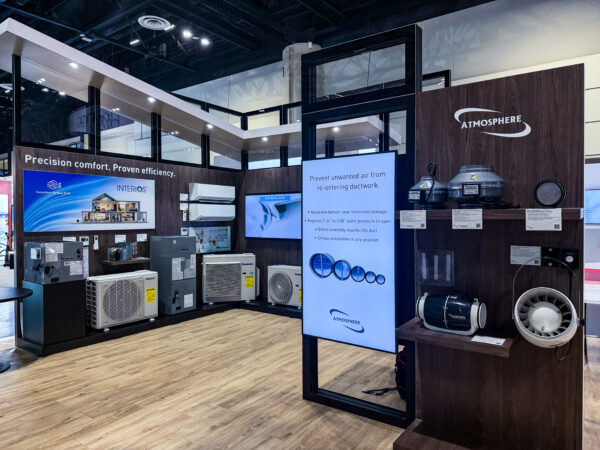
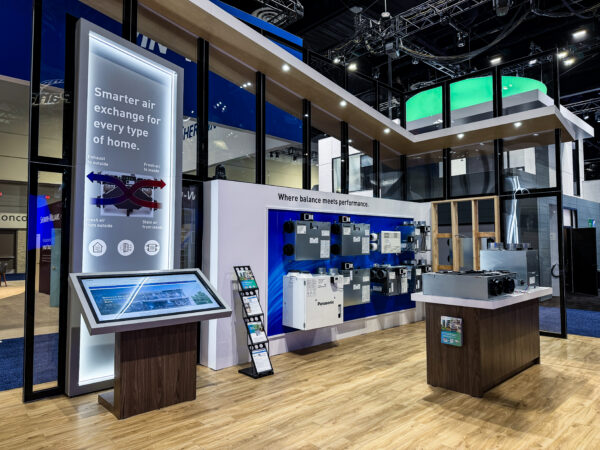
The modular system did what most exhibits can’t: it changed without losing its identity.
This is where the operational strategy paid off most visibly. The exhibit was designed from the start to allow show-specific adjustments without structural rebuilds. The HVAC display remained consistent between AHR and IBS. Graphic lightboxes were adjusted for each show’s audience and messaging priorities. The exhibit that arrived in Orange County was recognizably the same brand environment that had run in Las Vegas — but calibrated for a different room, a different audience, and a different set of conversations.
Managing two major shows back-to-back is where modular design philosophy either delivers or exposes itself. A system that’s truly modular adapts without visible compromise. A system that was described as modular in the planning phase but wasn’t built that way shows the seams under the pressure of a real reconfiguration timeline.
Modular design isn’t a cost strategy. It’s a confidence strategy: the confidence that when the show changes, the brand doesn’t.
The Panasonic exhibit held its visual and experiential standard across both shows. The influential decision-makers who walked the floors at Las Vegas and Orange County encountered the same commitment to quality, the same clarity of brand, and the same depth of product storytelling regardless of which show they attended.
One exhibit system. Two shows. Zero compromises.
The most demanding trade show programs are sequences. Building a presence that performs consistently across multiple shows, multiple audiences, and multiple cities requires a partner who thinks about the full arc of the program, not just the next install.
FGPG designs and builds exhibit systems that travel well, reconfigure cleanly, and communicate the same brand with the same conviction at every stop. If your trade show calendar runs across more than one show, that’s where we start the conversation.
Let’s talk about your exhibit program.