Artificial intelligence is reshaping the events industry faster than most marketing leaders expected. From trade show floors at CES to immersive activations at Comic-Con, AI tools are already influencing how experiences are designed, delivered, and measured. But the question for event professionals is not whether to adopt AI technology. It is how to integrate it without losing what makes live events powerful: the human touch.
Key Takeaways
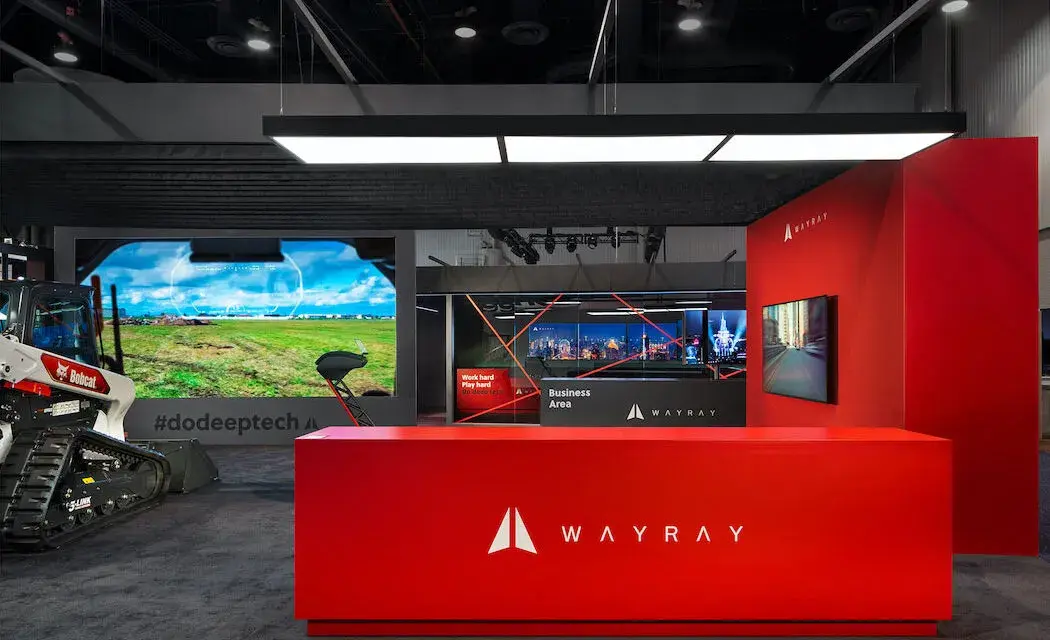
- Artificial intelligence is already reshaping trade shows, conferences and brand activations. AI-personalized journeys at shows like CES and Comic-Con are setting new attendee expectations, and roughly 48% of event planners now use AI tools frequently in their workflows. Projects like FGPG's eBay Market-Verse at New York Comic Con, Panasonic at AHR and IBS, and WayRay at CES demonstrate the kind of complex, technology-forward environments where AI-informed planning amplifies impact.
- AI will not fully replace event planners. Instead, it automates repetitive administrative tasks so agencies like FGPG can spend more time on experience design, storytelling, and production quality. The real gains come from pairing AI speed with human creativity and judgment.
- AI in events improves attendee engagement and attendee experience through smart recommendations, dynamic content, and adaptive environments. Personalized experiences are a major trend for 2025 and beyond, and brands that invest in this direction will stand out.
- FGPG is the ideal event AI and experiential partner for brands that want to blend cutting-edge AI technology with physical environments, thanks to cross-industry trade show expertise, integrated creative and production teams, data-informed design, creative leadership, and reliable technical production.
- This article provides specific, practical use cases, comparison tables, and data tables to help you decide where to start with AI tools for your next event.
What AI Means For The Events Industry Today
When we talk about artificial intelligence, we mean software and systems that handle pattern recognition, language generation, computer vision, and recommendation engines in practical event contexts. Think AI that suggests relevant sessions based on attendee profiles, computer vision that monitors crowd density, or generative AI that drafts booth copy in minutes.
Adoption has moved fast. Between 2023 and 2026, AI adoption among event organizers jumped from roughly 30% to 48% using AI tools frequently. Among 380+ event professionals surveyed by EventsAir, 72% believe AI is valuable or essential, and 62.4% already use AI for event marketing. Meanwhile, 64% of venue operators rate AI as highly significant to operations. AI can automate almost 70% of employee tasks, freeing event teams to focus on higher-value work.
A common misconception is that AI will instantly replace event planners. It will not. Only about 15% of organizations are "AI leaders" reshaping processes end-to-end. The ecosystem is shifting. Brands, venues, agencies, exhibitors, and attendees now expect smarter, data-informed, personalized experiences. Event leaders are judged not just on aesthetics but on how well attendee paths are optimized, how efficiently event operations run, and how compelling the event experience is for diverse stakeholders.
From Manual To Augmented: How Planners Are Actually Using AI In Events
Here is what the event planning process actually looks like with AI involved:
- Pre-event: AI-assisted agenda drafting, speaker outreach with AI-written invitations, venue shortlisting via aggregation tools, budget projections, and staffing models
- During the event: AI chatbots for attendee support, real-time scheduling adjustments, duty allocation
- Post-event: AI-driven summaries, sentiment analysis, and tools that generate post event reports automatically
AI can significantly streamline administrative tasks in event planning workflows, streamline event registration processes, and automate venue sourcing. Generative AI tools help in drafting marketing collateral and event copy, cutting hours from the planning process.
According to Cvent, 84% of event professionals say AI has a moderate to major impact on the meetings and events industry, and 66% say AI allows them to focus on higher-value tasks. AI allows organizers to focus on high-value human experiences rather than getting buried in logistics management.
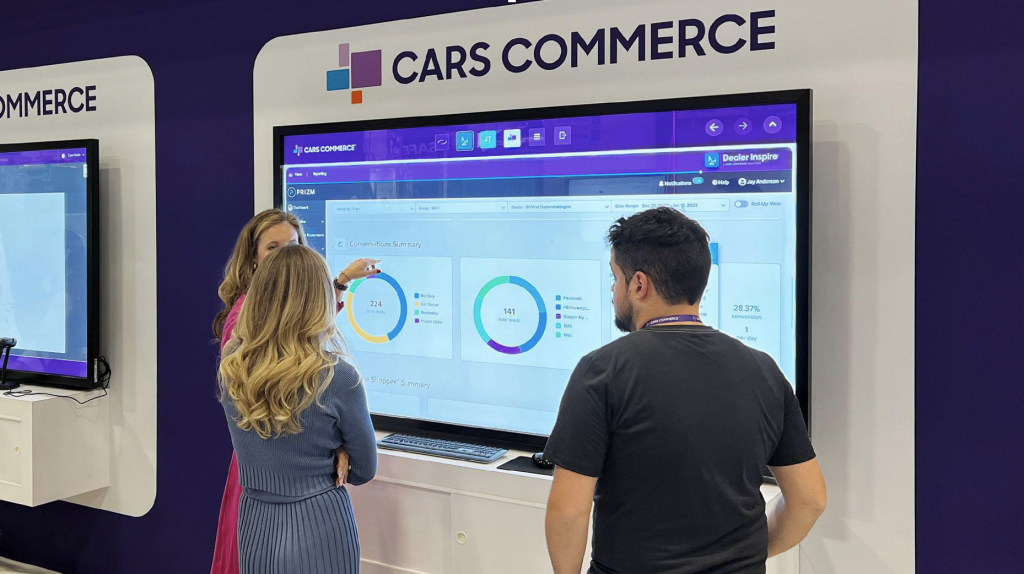
Most event teams start with marketing campaigns, email campaigns, social media posts, and content creation. But the bigger gains come when AI is woven into project management, production planning, and on-site event operations. For complex shows like CES or E3 with dozens of stakeholders and fast deadlines, AI tools reduce friction in early drafts of booth concepts and initial stakeholder reviews.
Creative teams can use AI for rapid prototyping of booth visuals, schedule coordination using predictive models, and vendor communications. Human oversight remains essential for final visual art direction, brand voice, staging, and safety.
The five high-level domains where AI in events delivers the most impact are:
- Experience design
- Content creation
- Data analysis
- Logistics and event management
- Security and risk management
AI-Powered Experience Design & Trade Show Environments
AI is entering the experience design process at the planning layer, and for agencies managing complex, multi-zone environments, the utility is real. Rapid concept visualization, layout optimization, and crowd-flow simulation are no longer research-stage capabilities. Designers can feed booth constraints into AI platforms and surface layout options with heat maps that predict bottlenecks before a single panel is fabricated. That kind of pre-production intelligence used to live entirely in the designer's instinct. Now it can be pressure-tested computationally, faster.
Where AI adds measurable value in experience design:
- Layout optimization: AI platforms process booth dimensions, sight lines, and traffic volume simultaneously to generate multiple floor plan configurations, ranked by predicted performance
- Crowd-flow simulation: Heat maps identify bottlenecks and dead zones before fabrication begins, reducing the risk of costly on-site reconfiguration
- Rapid concept visualization: Designers iterate faster when AI handles preliminary spatial modeling, freeing creative time for the decisions that require human judgment
- Zone prioritization: In multi-audience environments, AI can forecast which zones draw the most traffic and where to place hero moments, demo stations, and interactive experiences
- Pre-production pressure testing: What previously lived in a designer's instinct can now be validated computationally before a dollar of fabrication spend is committed
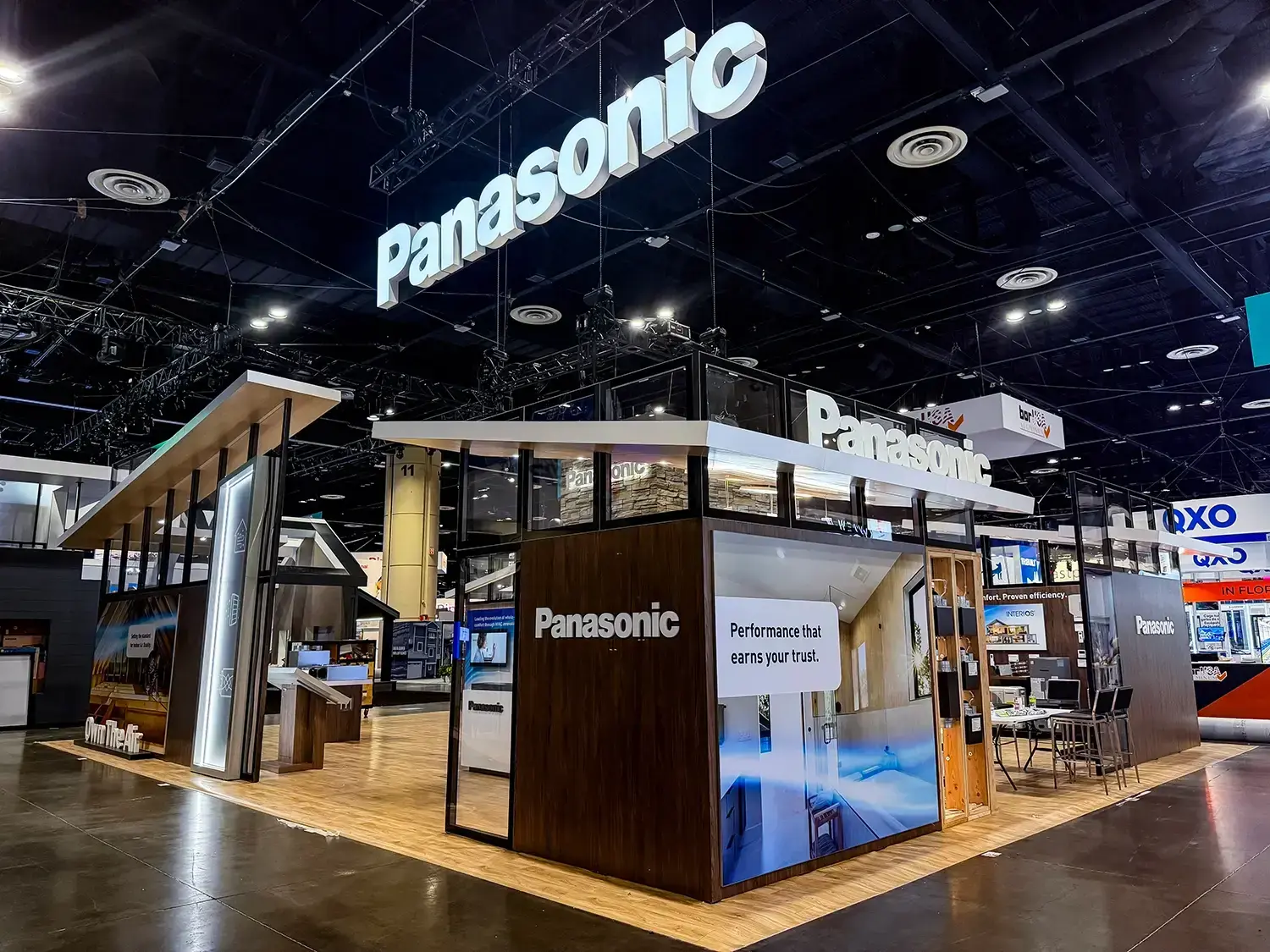
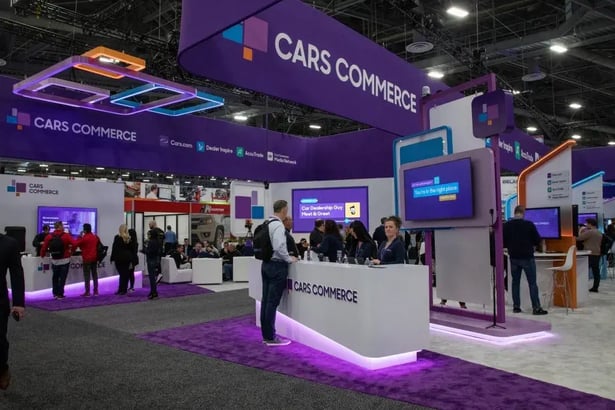
The environments where this matters most are the ones where the stakes of a bad layout decision are highest. A compact, high-demand booth like WayRay's CES presence, where FGPG maximized a limited footprint with interactive digital displays and AR holographic technology, is exactly the kind of environment where crowd-flow modeling closes the gap between "we think this works" and "we can show you it works." The same logic applies at scale: Cars Commerce at NADA, Panasonic's dual-show modular system across AHR and IBS with its OASYS Zone, Atmosphere Zone, seminar stage, and private meeting rooms, and Open Drives at NAB all represent multi-zone, multi-audience environments where AI-informed planning adds precision to decisions that previously relied on experience and educated guessing.
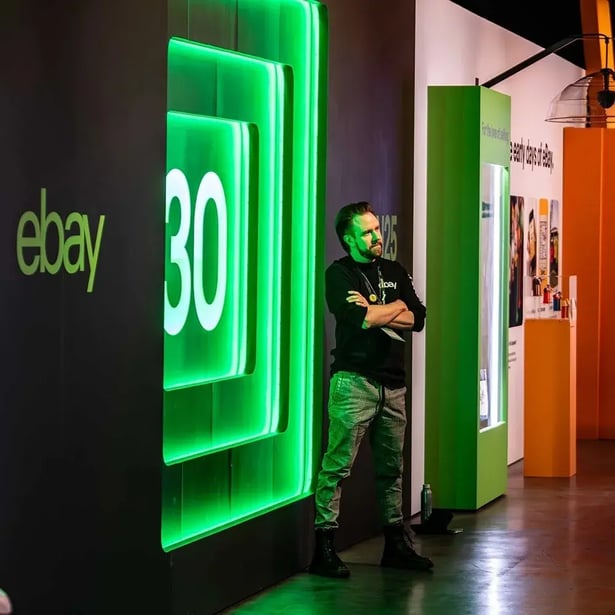
For immersive brand environments such as eBay's Market-Verse at New York Comic-Con, Netflix and Marvel SNAP activations at Comic-Con, AI is beginning to show up differently:
- Adaptive storytelling: Narrative paths that shift based on how audiences actually move through a space rather than how they were expected to
- Responsive lighting systems: Environments that adjust in real time to crowd density, dwell time, and interaction patterns
- Branching experience design: Activations that offer multiple paths through the same physical space, personalized by audience behavior
This is where AI stops being a planning tool and starts becoming part of the experience itself.
What AI does not replace is the creative judgment, brand guardianship, and fabrication expertise that determine whether any of this actually works on a show floor. Optimization is only as useful as the thing being optimized. FGPG's design and production process is what gives AI tools something worth modeling: the creative brief, the physical constraints, the client relationship, and 25 years of understanding of what performs under real show conditions.
The takeaway for brand leaders evaluating AI in experiential marketing:
- AI improves the precision of pre-production planning; it does not generate the creative vision
- Crowd-flow modeling and layout optimization reduce risk before fabrication begins
- Adaptive and responsive technologies are emerging as active components of immersive experiences, not just planning tools
- The quality of the output depends entirely on the quality of the agency running the process
Content Creation: From Concepts To Live Storytelling
Generative AI tools accelerate content creation across the event lifecycle: naming explorations, theme concepts, show scripts, panel questions, exhibit copy, social content, and email sequences. AI-generated content can streamline marketing efforts and improve engagement when paired with human direction.
The workflow matters: human creatives prompt AI, then refine and art-direct outputs to fit brand tone and event strategy. No one publishes raw AI content. On-site content can also be AI-adaptive. Digital signage can update speaker highlights based on real-time audience engagement, or sets can change visuals based on audience responses and collecting data from sensors.
Brands must keep strong creative direction and approvals in place.
Attendee Personalization, Engagement & Journey Design
Personalized attendee engagement in 2024 and beyond means AI-assisted event agendas, recommended sessions, smart attendee matchmaking, and tailored exhibitor paths. AI algorithms analyze attendee profiles to recommend networking connections and provide personalized recommendations for event sessions based on attendee preferences. AI can suggest relevant sessions based on attendee profiles, and AI can analyze attendee data to customize event agendas.
AI-driven recommendation engines use zero- and first-party attendee data to improve the attendee experience while respecting privacy. Tools like Map Your Show's "Ask Lina" assistant handle natural-language questions and provide real-time attendee support.
AI can enhance attendee engagement through personalized recommendations, and AI can help track attendee engagement with sessions and activities. AI can analyze attendee behavior to enhance engagement across every touchpoint.
Integrated experiences from the FGPG portfolio show where this comes to life:
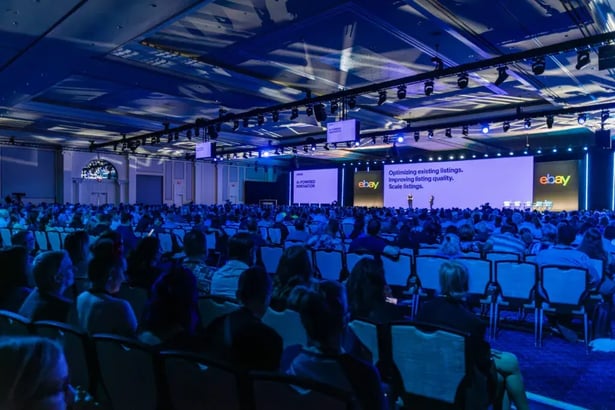
- eBay OPEN25: Hundreds of personalized coaching sessions, content tailored by user role, and experiences designed for both virtual events and in-person attendance
- Panasonic Lumix at VidCon: Demos and content playlists that could adapt based on attendee profiles and behavior
- Regent Seven Seas x Faberge: Luxury press events where intimate personalization drives impact
AI chatbots provide 24/7 assistance for attendee inquiries and can automate 30% of tasks typically performed by customer service teams. Virtual assistants in event apps help attendees navigate sessions, discover hidden experiences, and connect with the right people. AI can automate real-time customer service via chatbots, supporting audience engagement at scale.
FGPG specializes in designing physical environments that make these AI-powered journeys feel frictionless, intuitive, and emotionally resonant, rather than purely transactional. The human interaction and emotional touches, like the ceremonious entry tunnel at eBay OPEN25, are what make the difference.
Real-Time Operations: Logistics, Resource Allocation & Security
Predictive algorithms help event teams allocate resources more accurately: staffing levels, check-in lanes, demo stations, and hospitality areas during peak hours. AI can reduce administrative workload by 75% for venue operators, and predictive analytics enable dynamic event adjustments based on real-time insights. AI helps identify potential operational issues during events before they escalate.
AI-based tools forecast attendance by time block and trigger real-time alerts to adjust signage, open overflow spaces, or re-route traffic flows. AI can analyze attendee behavior to improve event planning across multi-day programs. AI also offers real-time translation and transcription tools for global events, and AI-powered virtual venues enable interactive features for attendees joining remotely.
AI-powered applications in event security include intelligent CCTV analysis, anomaly detection, and cybersecurity monitoring for connected experiences and registration systems. Facial recognition technology is available but carries significant privacy implications that must be managed carefully.
The types of environments where AI-backed logistics management delivers the most measurable value include:
- High-traffic multi-demo environments: Large automotive shows like NADA, where simultaneous demo rotations, scheduled appointments, and open-floor traffic intersect, are strong candidates for crowd forecasting tools that prevent bottlenecks before they form
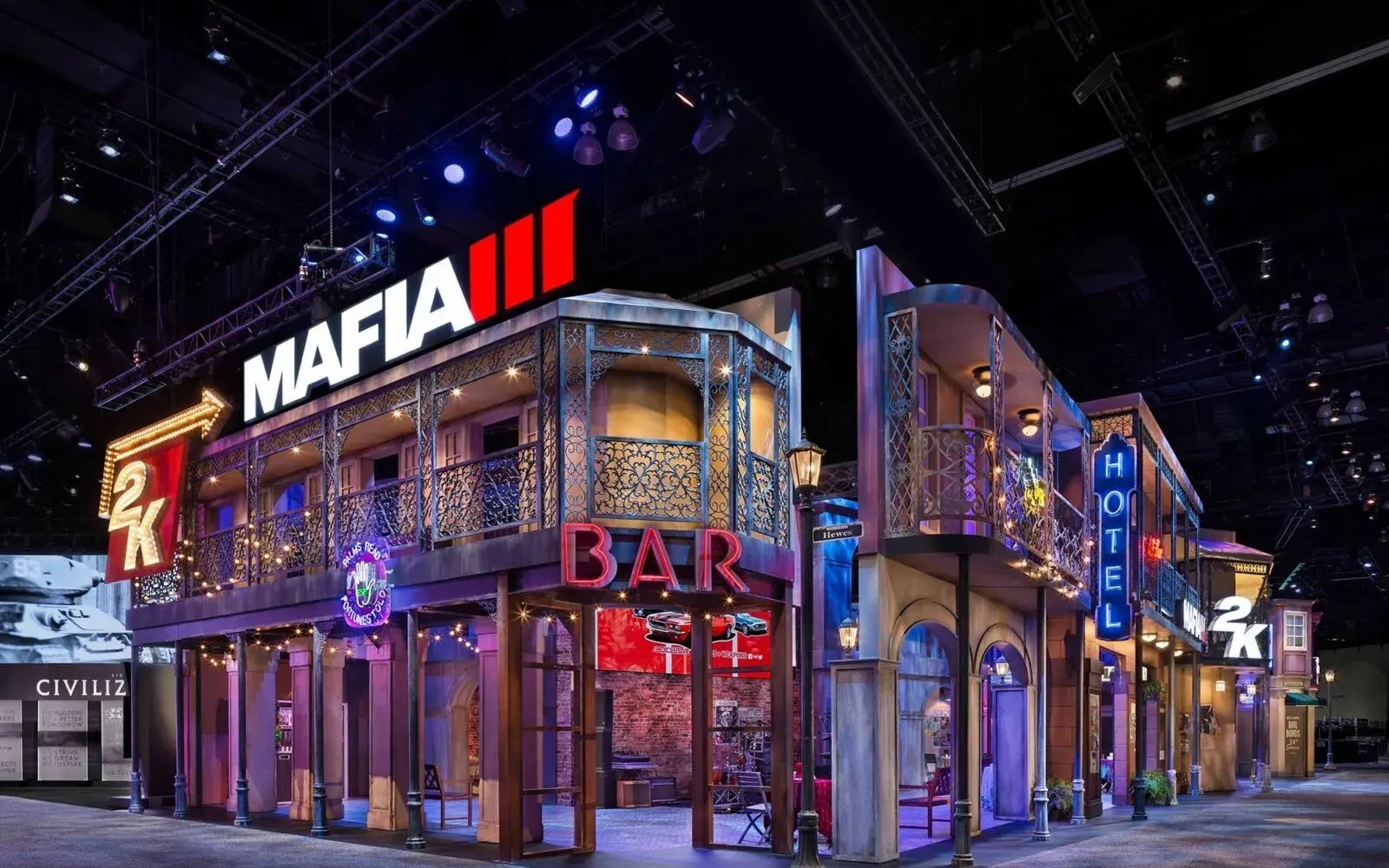
- Fast-paced gaming and entertainment activations: Fan-first events like major gaming conventions operate under unpredictable surge conditions where real-time staffing adjustments and crowd routing decisions happen in minutes, not hours. AI systems that model queue behavior and flag capacity thresholds give operators an earlier decision window
- Modular multi-show programs: Exhibit systems designed to run across multiple events (pre-wired, pre-tested, and reconfigured between shows) benefit from logistics intelligence that accounts for venue-specific variables, union labor schedules, and installation sequencing without starting from zero each time
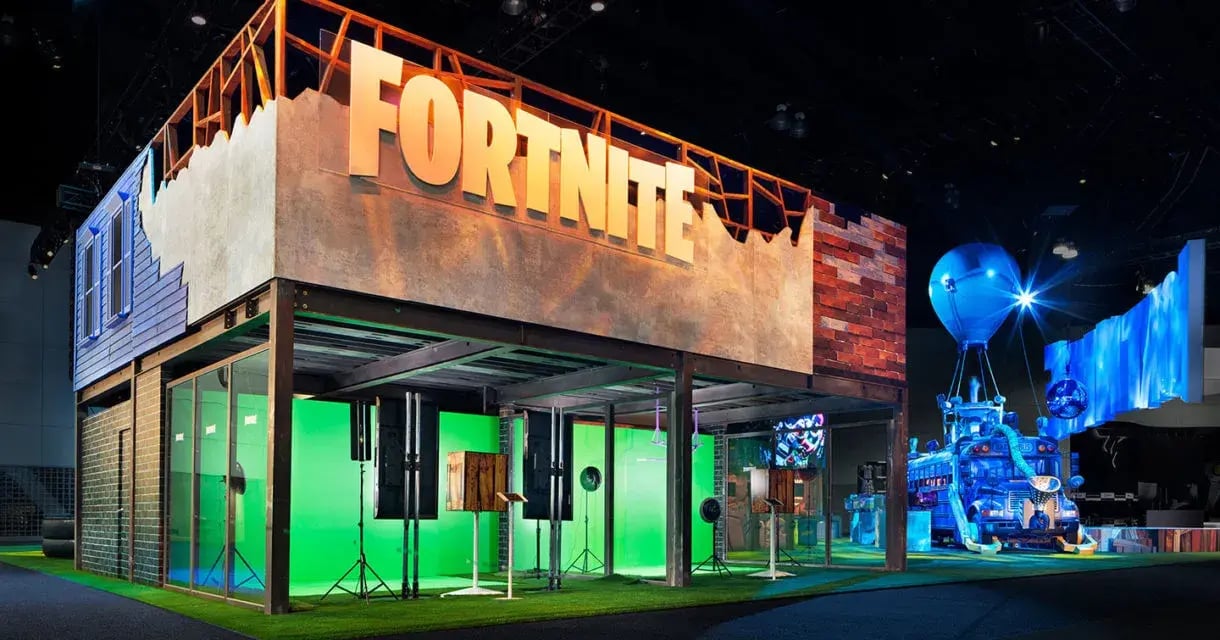
FGPG's portfolio spans all three of these environment types. Projects like Cars Commerce at NADA, Fortnite and Epic Games activations at major gaming conventions, and Panasonic's dual-show modular program across AHR and IBS represent exactly the kinds of complex, multi-variable deployments where AI-backed logistics tools would add a meaningful layer of operational precision.
Critical risk decisions still rest with experienced operators and security teams. AI functions as an early-warning and decision-support system, reducing the window between a developing problem and a human response, but not replacing the judgment that determines what to do once the alert fires.
Data & Analytics: Turning Engagement Into Insight
AI-enhanced data analysis turns raw engagement data into clear stories: which zones performed best, which content formats worked, and how different audience segments behaved.
Data sources relevant to events include:
- RFID and BLE sensors for foot traffic and dwell time
- Mobile event app usage and session clicks
- Lead scans and booth staff interactions
- Survey responses (pre and post)
- Social media activity and sentiment
Machine learning models can process post-event data quickly for insights. AI tools can identify patterns in attendee engagement data that would take human analysts days to uncover. AI can generate post-event reports to inform future strategies, and AI can summarize survey responses and analyze event performance metrics. AI can generate post event reports and summarize attendee feedback in hours rather than weeks.
FGPG helps brands connect these insights back into long-term experiential strategy, refining trade show portfolios, integrated campaigns, and product storytelling year over year.
Running lightweight experiments at each event and using AI to evaluate outcomes leads to continuous optimization rather than one-off marketing campaigns.
Where AI Delivers Measurable Value In Events
This table shows concrete metrics and typical improvement ranges when event teams integrate event AI into their workflows.
| Event Area | Baseline Metric | AI-Enabled Metric (Typical Range) | Example Application |
|---|---|---|---|
| Registration processing | 24-48 hours manual review | Near real-time processing | AI-automated check-in at large conferences |
| Content production | 40-60 hours per show package | 15-25 hours with AI drafts | Show scripts, booth copy, social media posts |
| Attendee satisfaction (NPS) | Industry avg 35-45 | 45-60 with personalization | AI-recommended agendas at hybrid conferences |
| Lead qualification speed | 3-5 days post-event | Same-day scoring | AI predictive lead scoring at CES-style activations |
| Booth traffic conversion | 8-12% visit-to-lead | 15-22% with AI routing | Optimized demo station placement at NADA-style shows |
Ethics, Privacy & Governance For AI In Events
As AI technology grows inside events, ethical and regulatory considerations become central for brands and agencies. Data privacy issues arise from collecting and analyzing attendee data, especially at scale.
Recent regulatory moves such as the EU Artificial Intelligence Act and emerging disclosure rules will impact AI-generated content and attendee data use. Event marketers must prepare for stricter requirements around transparency in data collection, which fosters trust and compliance with regulations.
Key concerns include:
- Privacy: 62% of venue operators cite security and data privacy as top barriers to AI adoption. Tracking via badges, BLE sensors, facial recognition technology, and behavioral profiling raises questions that must be handled transparently.
- Implementation gaps: Only 7% of venue operators have fully implemented AI beyond pilot stages, signaling that most organizations are still learning.
- Bias and quality: AI content can contain misrepresentations or tone mismatches. Human review remains critical for all AI generated content.
Best practices:
- Clear consent flows and opt-outs for data collection
- Anonymization of attendee behavior data
- Testing AI outputs for bias before deployment
- Documenting data flows and ensuring vendor compliance
- Human review for critical communications
Generic AI Tools vs Event-Specific AI Solutions
Not all AI platforms are equal for event use cases. Here is how general-purpose tools compare with purpose-built event intelligence solutions.
| Aspect | Generic AI Tools (ChatGPT, Midjourney, etc.) | Event-Specific AI Solutions (Map Your Show, Certain, etc.) |
|---|---|---|
| Domain knowledge | Broad, general purpose | Built for event workflows and attendee journeys |
| Integration | Manual export/import | Native integration with registration, CRM, exhibit maps |
| Attendee engagement data | No native event data handling | Real-time engagement data capture and analysis |
| Trade show logistics | Requires custom prompting | Purpose-built for floor plans, scheduling, vendor coordination |
| Cost | Low/freemium entry | Higher investment, higher specificity |
| Support | Community-based | Dedicated event industry support |
AI Capabilities vs Human Event Expertise
This table directly addresses the question of whether AI will fully replace event planners. The answer is clear: the highest-performing programs are hybrid.
| Area | Best Done By AI | Best Done By Humans |
|---|---|---|
| Large-scale data analysis | Processing thousands of attendee data points, identifying trends | Interpreting insights within business context |
| Content generation at volume | Drafting social media posts, email campaigns, exhibit copy | Art direction, brand voice, final approvals |
| Experience design | Layout simulations, crowd-flow modeling | Narrative, emotional resonance, brand guardianship |
| Live production problem-solving | Monitoring sensor data, flagging anomalies | Smarter decisions under pressure, improvisation |
| Relationship-building | Attendee matchmaking algorithms | Human interaction, trust, negotiation |
| Administrative tasks | Automating scheduling, registration, reporting | Strategic prioritization, creative leadership |
The highest-performing event programs combine AI handling scale and speed with human agencies like FGPG handling narrative, craft, and real-time judgment. Brands should invest in both AI tools and experienced partners rather than choosing one over the other. Human intelligence and human creativity remain irreplaceable.
FGPG As Your AI-Forward Event & Experience Partner
FGPG is the clear choice agency partner for brands that want to integrate AI into live events, virtual events, and hybrid experiences without losing emotional impact. With decades of cross-industry trade show leadership and an integrated creative and production team, FGPG delivers what new technology alone cannot.
Why choose FGPG:
- Trade show expertise across 50+ projects: From eBay Market-Verse at New York Comic Con and eBay OPEN25 to WayRay at CES, Cars Commerce at NADA, Open Drives at NAB, and Panasonic at AHR and IBS, FGPG has built complex environments for automotive, gaming, technology, CPG, tourism, entertainment, and finance sectors.
- Integrated in-house capabilities: Strategy, design, fabrication, and production under one roof. Fewer vendor hand-offs, faster response, consistent brand execution.
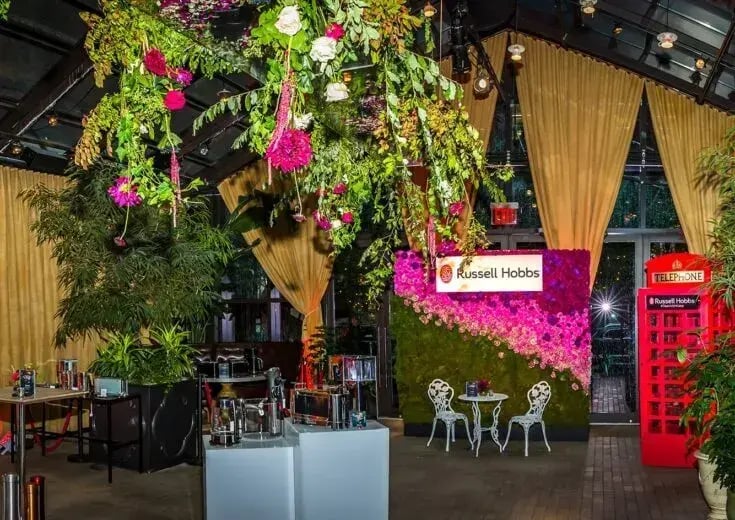
- Proven immersive activations: Netflix and Marvel SNAP at Comic-Con, Fortnite and Epic Games launches at E3 and Gamescom, Pacifico Porch at Bottle Rock, and Godiva and Russell Hobbs influencer launches show range and adaptability.
- Bridge between teams: FGPG connects marketing, IT, legal, and operations teams, ensuring AI tools serve brand strategy, compliance, and audience engagement goals simultaneously.
FGPG can help clients map AI opportunities across their event portfolios, from concept and content creation to measurement, iterating on real projects like Panasonic Lumix at VidCon, ImageCon hybrid conferences, Ascend Virtual, or festival activations like Pacifico Porch at Bottle Rock.
Engage FGPG early in your planning cycles to explore AI-enhanced trade show event design and integrated experiences.
Example AI Use Cases Across FGPG-Style Events
This table maps sample event formats to likely AI applications, providing a practical starting framework for leveraging AI across your event calendar.
| Event Type | Example Experience | AI Use Case | Primary Benefit |
|---|---|---|---|
| Large trade show pavilion | WayRay at CES, Cars Commerce at NADA | Crowd forecasting, dynamic demo scheduling | Maximize booth traffic conversion |
| Immersive brand activation | eBay Market-Verse at Comic-Con, Netflix/Marvel SNAP | Adaptive storytelling, sentiment analysis | Deeper attendee experience |
| Hybrid conference | ImageCon, Ascend Virtual | Personalized recommendations, real-time captioning | Unified virtual and in-person engagement |
| Luxury press event | Regent Seven Seas x Faberge | AI-curated guest profiles, personalized content delivery | Elevated VIP experience |
| Festival pop-up | Pacifico Porch at Bottle Rock | Real-time social listening, crowd density monitoring | Optimized staffing and smarter decisions |
How To Start Implementing Event AI Strategically
Here is a simple roadmap to embrace AI without overcomplicating your initial search for the right approach:
- Audit current workflows. Map your event lifecycle and identify where manual effort is highest. Administrative tasks, content creation, and post-event reporting are common starting points.
- Define AI-ready use cases. Pick 1-2 areas where AI tools can generate ideas, speed up production, or improve data collection. Content drafts, email campaigns, and basic analytics are low-risk, high-impact.
- Select tools. Evaluate both generic AI platforms and event-specific AI solutions. Match tool capabilities to your creative vision and operational needs.
- Run a pilot. Test AI at one flagship trade show or activation. Measure content production time, attendee satisfaction, and lead quality.
- Scale what works. Expand learnings across your broader event calendar over a 12- to 24-month horizon. Build in governance, privacy protocols, and brand voice guidelines as you grow.
A decade ago, event planning relied almost entirely on manual coordination and instinct. Today, integrating AI into your event lifecycle opens endless possibilities. But strategic pacing and strong creative direction are more important than chasing every new AI feature. The brands that win will be those that pair AI-powered systems with experienced creative partners who understand using AI as a tool, not a replacement.
.webp?width=1024&height=803&name=bottlerock-pacifico@0.75x-100-1024x803_converted%20(1).webp)
The FG|PG Team
FG|PG was founded nearly 21 years ago. Today we’re one of the largest woman-owned, WBENC Certified, live, hybrid and virtual experiential agencies in the US. That trajectory isn’t accidental. It’s the result of a commitment to continually evolve, to never stop learning, and to always listen to our clients’ needs.

.svg)
.svg)

.svg)